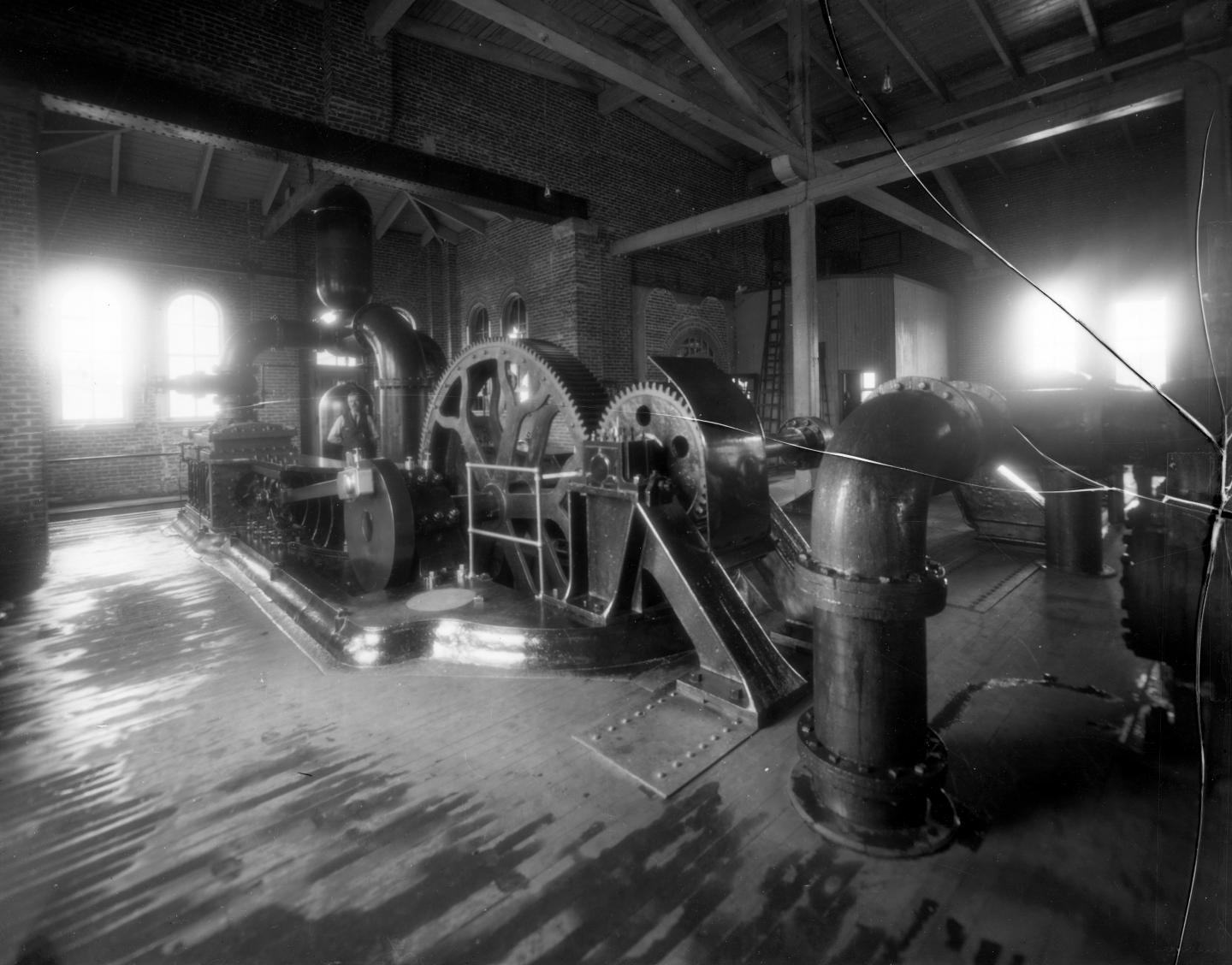
James Liston became an employee of the water department in 1890, moving up the ranks over the years to become the city's chief "wrench artist." While water department superintendents wrestled over budgets and permits in City Hall, Liston's job was far more hands-on. In 1912, the Spokesman-Review said of him, “When Liston entered the service of the water department he dug the trenches, made the connections and turned the water on himself. Of late years it has required a dozen men to take care of this work.” Over a career spanning 22 years, James Liston single-handedly connected thousands of Spokane homes to city water, one pipe at a time.
City directories indicate that Liston lived in various boardinghouses on Riverside Avenue until the Pedicord Hotel opened in 1895. He promptly took rooms in the new hotel and lived there for the rest of his life. He never married or had children, and his family consisted of one sister who remained in Ireland.
Fortunately, this era offered many social opportunities for an unmarried man who was outgoing and civic-minded. Liston became part of a trio of friends based at the Pedicord, with the other two members being the hotel’s manager, Frank S. Donaldson, and John Osterberg, manager of the nearby Sam Crowe Furniture Company which was co-owned by T. J. Pedicord. Although their daily interactions are unrecorded, their names often appear together in articles about minor social events, such as a “duck supper” in 1910. In 1912, Donaldson, Osterberg, and Liston took a two-week fishing excursion together “in the vicinity of Marcus.” Donaldson described their vacation to the Spokesman-Review as “a most delightful trip” and marveled that residents of Spokane would travel to distant locations when “some of the grandest scenery and the finest hunting and fishing to be found anyplace” was “almost at their doors.”
Liston was also friendly with the hotel’s owner, T. J. Pedicord. At Pedicord’s 51st birthday celebration in 1910, several of his friends performed in a talent show: some recited poetry, some sang, and a Confederate veteran shared his experiences at Vicksburg. Liston, drawing on his own unique experiences, “gave a short talk on ‘The Danger of Microbes in Water’ and cautioned those present about taking too many chances in drinking water that had not been first been run through a sieve. He also related a few thrilling water-wagon experiences.” The event was a great success and Pedicord declared his intent to have “another one just like it on my ninetieth birthday.”
Like many of Spokane’s pioneer residents, Liston was an immigrant. He originally was born in Ireland and became a naturalized American citizen on April 19, 1894. His choice of fraternal organizations suggests that his Irish identity was important to him, as was his work: he was a member of the Ancient Order of Hibernians, the Foresters of America, the Knights of Columbus, the Irish-American Society, and the Inland Empire Water Association.
On December 6, 1912, Liston woke up in his room at the Pedicord Hotel, dressed, and went downstairs to the lobby. He “greeted the clerk in his usual congenial way” and remarked that he was feeling “unusually well.” He then sat down in his favorite chair, in his “usual corner,” to read the morning newspaper. A few minutes later, the newspaper dropped from his hands and he slid from his seat to the floor. He was already dead by the time the hotel staff reached him, taken at age 51 by heart failure.
Liston’s passing was front page news for both the Spokane Press and the Spokane Chronicle. He had worked for the city for 22 years, and “during all of that time, Liston had had charge of turning on and off of water taps.” At the time of his death, he was one of the longest-tenured city employees. Only a few days before his death, Liston had spoken to the Spokesman-Review about his perspective on Spokane’s development over the years:
"When I think of different periods through which the water department has passed in the 21 years I have been with it, talk of quiet times amuses me. The water department is a good barometer of the prosperity of a city, and conditions in Spokane department today are better than they were a year or even six months ago. [...] When we consider what this department has passed through in its time the present year will be numbered among the most prosperous ones in its history. I remember the time when some who are millionaires today could not pay their water bills, and it fell to my lot to cut them off. Some of these men still remember me and are glad to recall the days when we became acquainted through the medium of a cut-off wrench. When compared with those days the water department is now enjoying the bonanza era of its existence."
James Liston viewed Spokane through the lens of its water system, and it is clear that he very much liked what he saw. He was a man of such “sunny character” that he could make friends with someone even as he shut their water off, and a man who found his work so fascinating that he would present a lecture about water microbes at a friend’s birthday party. There are still thousands of homes in Spokane today that Liston personally connected to the city water system. They are his greatest monument.
]]>