<?xml version="1.0" encoding="UTF-8"?>
<feed xmlns="http://www.w3.org/2005/Atom">
  <title type="text">Spokane Historical</title>
  <updated>2026-09-13T23:46:21+00:00</updated>
  <generator uri="http://framework.zend.com" version="1.12.20">Zend_Feed_Writer</generator>
  <link rel="alternate" type="text/html" href="https://spokanehistorical.org/"/>
  <link rel="self" type="application/atom+xml" href="https://spokanehistorical.org/items/browse?output=rss2"/>
  <id>https://spokanehistorical.org/</id>
  <author>
    <name>Spokane Historical</name>
    <uri>https://spokanehistorical.org</uri>
  </author>
  <link rel="hub" href="https://pubsubhubbub.appspot.com/"/>
  <entry>
    <title type="html"><![CDATA[Spokane&#039;s &quot;Mayor for a Day&quot; (Who Never Was)]]></title>
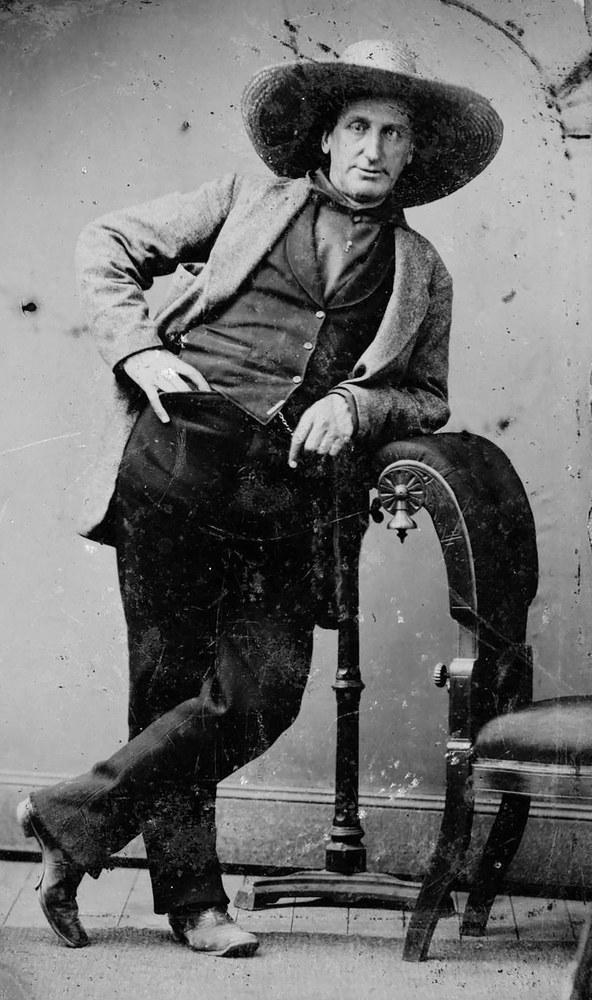
    <summary type="html"><![CDATA[<p><strong><em>The little-known (and utterly fictional) tale of Spokane's "mayor for a day," Josiah Forsyth. </em></strong></p><img src="https://spokanehistorical.org/files/fullsize/178390cb1630001c0bd4277c5468fae4.jpg" alt="If Josiah Forsyth had any real-world equivalent, it was the actor John Sewell Folds, better known by his stage name of &quot;Jack Langrishe.&quot;" /><br/><p>In 2025, a mysterious item surfaced online in Spokane history circles: two pages of typewritten text, photocopied at a slight angle, containing the intriguing tale of "Spokane's Unknown Mayor." </p><p>According to this document, in 1883, the great men of Spokane Falls had a problem. Their fine town was to be visited by the territory's governor, Elisha P. Ferry, on a day when the mayor would be out of town. Fortunately for these concerned city fathers, "there was in Spokane Falls at this time, a Shakespearean troupe [...] Mr. Josiah Forsyth, well known among mining camp and western frontier towns for his "Hamlet" and "King Lear", was prevailed upon to act as mayor pro-tem for the Governor's visit, and to be the key-note speaker for the day's festivities." </p><p>The piece explains that Forsyth performed his mayoral duties with great aplomb. Sadly, it seems he celebrated his successful performance too enthusiastically and fell into the river while inebriated. His acting troupe moved on without him, and his body was discovered a few weeks later and interred in Greenwood Cemetery under his stage name, as his real one was unknown. </p><p>According to the author, "the story might have ended there, but for the construction of Spokane County's new courthouse in 1894." It seems the architect of the courthouse, one Mr. W. A. Ritchie, desired to emulate European cathedrals and castles by interring Spokane's deceased civic leaders beneath the courthouse. Meeting with little support for this proposal, he arranged to have Josiah Forsyth removed from Greenwood and relocated to the courthouse burial vault instead, honoring Forsyth's role as Spokane's "mayor for a day." </p><p>Searches of early Spokane newspapers reveal no trace of a man named Josiah Forsyth. While the territorial governor did briefly visit Spokane in 1883, the man holding that office at the time was William A. Newell, not Elisha P. Ferry. Newell visited Spokane in September 1883 during a rolling celebration of the Northern Pacific line's completion. James N. Glover was demonstrably in town on that occasion and served as chairman of the associated festivities. </p><p>It turned out that the secret to this strange tale wasn't hiding in a newspaper article from the 1880s, but in an article from a century later. On October 14, 1985, Spokesman-Review staff writer Jim Camden revealed the truth in an article titled, "Former county employee fabricates a 'Forsyth saga'." According to Camden, the tale "was dreamed up nearly two years ago by an employee in the County Assessor's office." This anonymous former deputy assessor originally had told his co-workers that "they've got old county officials down there" in the courthouse basement. When these co-workers were skeptical, the prankster "went home and typed up the story on an old manual typewriter, added a letter-press headline, and brought back the story of Josiah Forsyth. He says he later confessed to his co-workers that the story was a fake. But by then the miracles of modern photo-copying had taken over and the story was circulating through the courthouse, minus any disclaimer." </p><p>The story came to the attention of county elections superintendent Tom Wilbur, who in turn passed it along to Pat Griffin when she was developing the Spokane Trivia Game in 1985. As one of the juicier tidbits of Spokane trivia, the Forsyth tale was repeatedly brought up in public conversations about the game. When it was highlighted by KHQ's show, "PM Magazine," the original creator of the tale realized that his office prank had spread further than he could have imagined.</p><p>Camden reported that the man who invented Josiah Forsyth "wishes at this point to remain anonymous. He doesn't fear any reprisals, but says he's having too much fun watching the story go around to have his name revealed." The man was quoted as saying, "I'm kind of getting a bang out of it. This may be the only thing I've ever done that may outlive me." </p><p>Forty years later, someone came to the Spokane History Researchers Facebook page with a question. "This article was found while going through some files at work, at Spokane County, though we have no idea where it came from," wrote Carson Harris. "We have tried looking everywhere from news articles to Google Scholar and haven’t been able to find its source. [...] Has anyone heard of this story?" Just as the original prankster hoped, the Forsyth saga had survived to puzzle another generation.</p><p>The original tale concludes, "Today, somewhere beneath Spokane County's grand courthouse lies a former Shakespearean actor, who worked under the stage name Josiah Forsyth, his real name known but to God. He is now all but forgotten to history, but having served as mayor for one brief, shining moment, he can truly be called Spokane's 'unknown mayor.'" While Forsyth's bones never truly rested there, he will haunt the courthouse for many years to come... or for however long it takes for the last stray photocopy of his legend to be removed from the county's file cabinets. </p><p><em><strong><a href="https://spokanehistorical.org/items/show/974">For more (including 5 images) view the original article</a></strong></em></p>]]></summary>
    <published>2026-09-08T14:03:52+00:00</published>
    <updated>2026-09-13T23:46:21+00:00</updated>
    <link rel="alternate" type="text/html" href="https://spokanehistorical.org/items/show/974"/>
    <id>https://spokanehistorical.org/items/show/974</id>
    <author>
      <name>Liz Wood</name>
    </author>
  </entry>
  <entry>
    <title type="html"><![CDATA[Carving a Legend: What remains of the 1977 Leonard totem pole]]></title>
    <summary type="html"><![CDATA[<p><strong><em>There were once two totem poles on this island in the river. This is the story of the one that is gone.  </em></strong></p><img src="https://spokanehistorical.org/files/fullsize/69eb340a4f03f602b2d7309e020a76b5.jpg" alt="The concrete base and stump of the Leonard totem pole." /><br/><p><h3>Setting the Stage</h3>
</p><p>In November of 1969, two unprecedented candidates were in contention for the position of City Council Member for Spokane's District 1: James E. Chase, who had spent much of the past two decades as head of the Spokane NAACP, and Margaret J. Leonard, a community organizer and accountant who was usually described in contemporary newspaper articles as "a housewife." The race was a nail-biter: fewer than a thousand votes ultimately separated the winner from the loser. In the end, it would be Leonard who took office later that month, becoming Spokane's first female member of city council. Chase's time would come a few years later: he became Spokane's first Black city council member in 1975 and Spokane's first Black mayor in 1981.</p><p>Margaret J. Leonard served on the council for several terms, concluding her service in 1977 in order to run for mayor. 1977 was also when she first encountered a man called Chief Wobay Kitpou at an event sponsored by the Inland Northwest Big Game Council (later the Inland Northwest Wildlife Council). The precise details of the conversation were not recorded, but Leonard announced on April 14, 1977 that "she and two members of the Inland Northwest Big Game Council, Kent Hall <i>(sic)</i> and William B. Rollins Jr. have persuaded the owners of a large totem pole to donate it to the city."</p><p>Kitpou had evidently encountered Leonard at the INBGC event and offered to turn a large, uncarved cedar pole into a totem pole "as a goodwill gesture." The Parks Board accepted the proposal, noting that the totem pole would be carved for free by "Chief Wobay Kitpou, a shaman, or medicine man, of the Algonquin Indians and a member of the Canadian Parliament from Nova Scotia." Kitpou later acquired a local assistant, Colville tribe member and District 81 curriculum specialist Michael Paul, to participate in the pole carving.</p><p><h3>Creating the Pole</h3>
</p><p>The totem pole carving took place on the Howard Street bridge in Riverfront Park. The first cuts into the wood were made on August 15, 1977. They were hewed by Margaret Leonard herself (with some assistance from Kitpou and Paul). For the occasion, the councilwoman had dressed in "a red Indian overblouse with leather ties." According to a Spokesman-Review reporter, "the first figures to be cut at the top of the pole represent 'two men creating this for a woman.'" Kitpou added, "we call her Mayor, we are so sure." Other symbols on the totem pole were intended to represent "the wisdom of the tribes."</p><p>The carving and painting of the pole went rapidly, as Kitpou and Paul used chainsaws rather than traditional hand tools. It was raised into place only eleven days later, on August 26, and was formally dedicated on August 27th, 1977. This occurred in conjunction with a parkwide Harvest Festival, and activities on Canada Island included "displays of Native American foods, arts, crafts, and entertainment." Now there were two totem poles on Canada Island.</p><p><h3>Who was Wobay Kitpou?</h3>
</p><p>Algonquin Chief Wobay Kitpou was a Canadian man also known as James Albert Munster. Munster abruptly "went total Indian" (his wife's words) one night around 1960 when he walked into the woods and had a vision. He assembled his own ensemble of regalia, began introducing himself as Wobay Kitpou, and began describing himself as both a chief and a shaman or medicine man.</p><p>Kitpou's claims over the years included that he:</p><p>- Attended Eton, Cambridge and Oxford, where he was a star rugby player.</p><p>- Was a member of the Canadian Parliament.</p><p>- Earned a PhD in psychology.</p><p>- Served in both the Canadian and British navies.</p><p>- Commanded his own 37-man naval vessel.</p><p>- Spoke Algonquin, Micmac, Chippewyan, Ojibway, Penobscott, Abanaki, "some Cree," "can manage in Blackfoot" and "the now-defunct language of the old Algonquin chants."</p><p>- Served as a medical translator in Frobisher Bay, Goose Bay, and Greenland.</p><p>- Was born a shaman.</p><p>- Inherited his shamanic powers from his father in 1952.</p><p>- Learned his shamanic abilities as a young man from his grandfather, who lived to be 104.</p><p>- Was born to indigenous parents and adopted as an infant by a white couple, thus growing up without any knowledge of his heritage.</p><p>- Grew up living with his indigenous family and was close with his father, a tribal chief who eventually gave custody of him to his honored friend, King George V.</p><p>- Lived for "between eight months and two years" each with the Navajo, Apache, Cree, Yellowknife, Dogrib, and Samwin.</p><p>- Descended from 16 generations of shamans and chiefs.</p><p>- Personally met Queen Elizabeth II and other members of the British royal family four separate times.</p><p>- Had an extensive career in television and film while on leave from his Navy service, appearing in Little Big Man, Stagecoach, Wagon Train, The Warriors, Rifles '66, How The West Was Won, F Troop, A Man Called Horse, and Indian Paint, </p><p>- Survived the London Blitz.</p><p>- Was one of only 12 survivors of the sinking of the HMCS Louisburg.</p><p>- Inherited his light skin and blue eyes from a Norse great-grandmother who married into a local tribe in the 1700s after being shipwrecked. </p><p>Some of these claims have a kernel of truth (such as his navy service), some are unfalsifiable, and others are easily disproven. For instance, in 1972, Kitpou claimed that he had played "the medicine man" on NBC comedy F Troop (1965-1967). This character was actually played by vaudeville veteran Edward Everett Horton. Similarly, Munster is not listed as being among the survivors of the HMCS Louisburg - of whom there were far more than 12. </p><p>The cornerstone of Chief Wobay Kitpou's appeal was his ability to produce an endless stream of intriguing but fact-free statements about "Indian ways." In Spokane, he told people that it was "bad luck to measure the height" of a totem pole. In Minneapolis, he told people that by tribal law, a totem pole "belongs to all children under the age of 12 for 50 miles around." He claimed that "an eagle is always on top of the pole" and that the symbols on totem poles exist to "explain behavior patterns." He said that Native women had been using marijuana during childbirth for hundreds of years and that all true peace pipes contain marijuana. He also said that the indigenous peoples of North America were one of the lost tribes of Israel and that Vikings taught Algonquins how to smelt copper. </p><p>Kitpou often positioned himself as the sole surviving keeper of traditional knowledge, claiming that he was the only man alive who could translate "ancient Indian pictographs" and that he possessed the "only five remaining rolls of tribal laws belonging to the Indian nations." These last were sometimes also described as tablets, and depending on when he told the story, he either found them buried in the earth or hidden inside a Catholic church that was built by Algonquins. </p><p>An article in the June 1972 Micmac News describes a harrowing experience in which Kitpou had won the trust of a married couple who ran a shop called Indian Crafts. According to this story, he had ransacked their shop and also cleared out a back room that was being used to store powwow regalia and props, using their own car to transport the stolen goods. At the time of the article, the author had recently received "a letter from British Columbia asking for information about a Shaman Kitpou who he is considering to employ as he is interested in opening a longhouse museum in which he, Mr. Maybee, is to provide the funds and Munster Kitpou is to provide the collection. (The collection the man mentions is genuine and consists of artifacts from Indian people taken from them by Munster Kitpou.)"</p><p>Kitpou surrounded himself with artifacts of questionable provenance and age in his mobile museum, a.k.a. the "Rolling Reserve." He claimed at various times to have a medallion that was presented to his ancestors by William of Orange in 1630, a belt buckle from Custer's Last Stand, and a 200-year-old peace pipe (sometimes billed as 400 years old) that was once smoked by Queen Victoria. Some items from his collection were donated to various museums and cultural archives. Today, for instance, the Smithsonian's American Indian Museum has several items that were acquired from Kitpou, all now listed as "probably Non-Indian" in origin. Considering the account in the 1972 Micmac News, is likely that some of the objects Kitpou owned were genuinely crafted by indigenous artists. By rebranding them with invented ages and origins, he severed them forever from their original creators and contexts. Given Kitpou's long relationship with MONAC, many of his fabrications were likely also absorbed into the archives of the Northwest Museum of Arts and Culture after MONAC's closure.</p><p><h3>Afterward</h3>
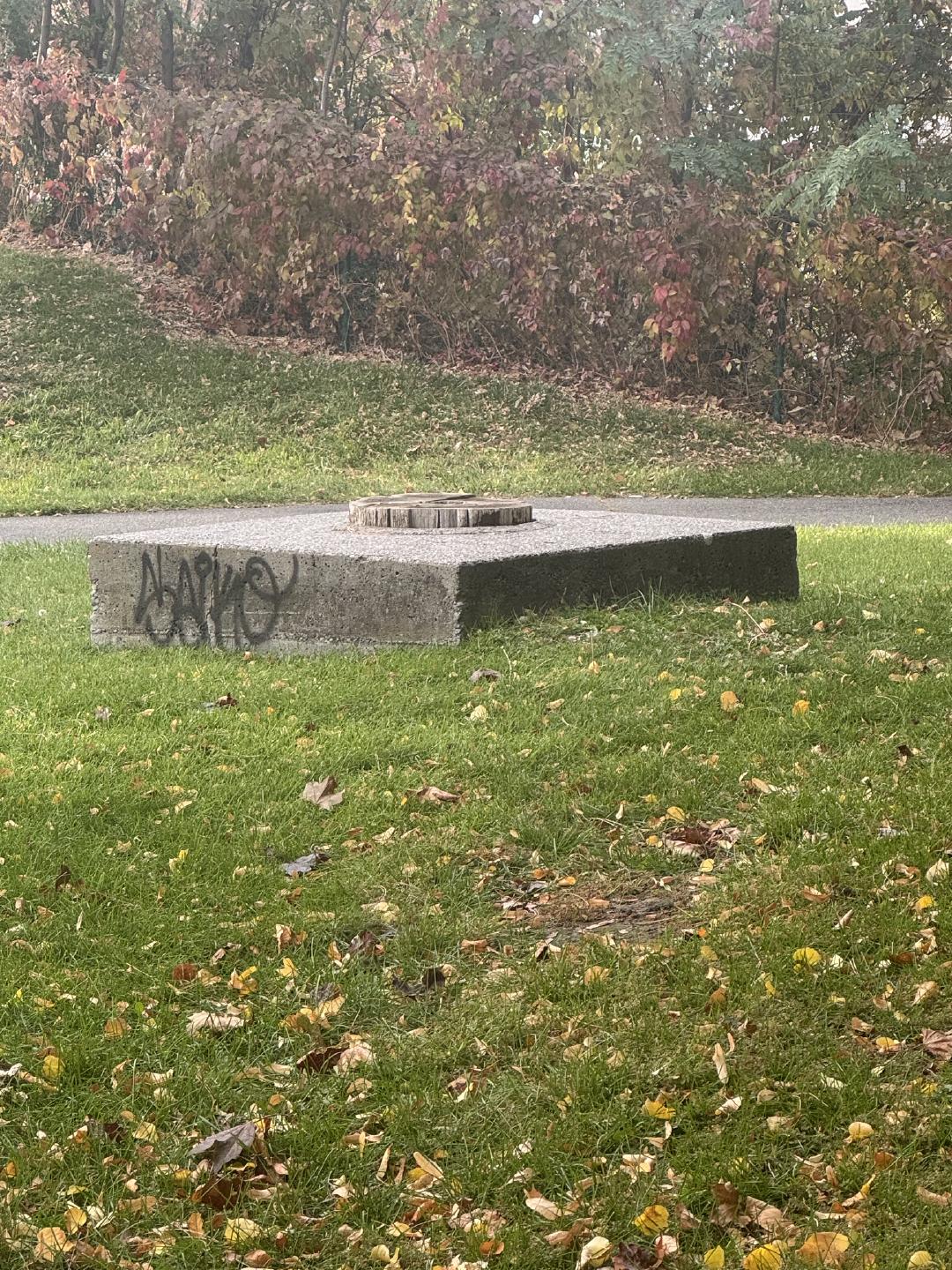
</p><p>Margaret J. Leonard did not become Spokane's first female mayor, although she did represent Spokane in the state legislature. Kitpou continued to revisit Spokane over the years, presenting at school events and carving four more totem poles with Michael Paul for the Museum of Native American Culture (MONAC) in 1981. When Michael Paul died in 1993, the Spokane school district named its "Indian education resource center" after him.</p><p>Public interest in the Leonard Totem Pole rapidly waned. In 2010, a Parks employee named Scott Brunell refurbished and repainted the dilapidated Leonard pole as "a labor of love," using donated tools and materials. An article about his efforts suggests that knowledge of the totem pole's origin was already lost: "Even though the pole is looking better, no one is really sure what it means, says Larry Carey, an Inland Northwest Wildlife Council member."</p><p>In 2016, the Spokane Tribe was granted certain rights and authorities over Canada Island, which included renaming it to Snxw Meneɂ (Salmon People Island). The Leonard totem pole was abruptly and unceremoniously removed from the park in 2019, with a chainsaw used to separate the top of the pole from the base. The reason for its removal was disputed, although spokespeople for the Spokane Tribe and the Parks Department agreed that the totem poles on the island had been "part of the broader discussion" about the Spokane Tribe's management of the island. Kent Hull, one of the original Inland Northwest Big Game Council members who helped arrange the donation, took custody of the top part of the pole.</p><p>It requires access to dozens of Canadian and American newspaper articles to lay bare the extensive contradictions in Kitpou's public statements. As a result, there are still many believers in the Kitpou legend - even though he didn't always believe in it himself. According to a 1971 article: "He says some people have doubted him. They look at his pale skin and blue eyes and wonder what the hell he is doing in 'that monkey suit.' And he says there is a time when he might have admitted it all to himself but he has earned the respect of too many tribes since then. [...] 'This headpiece is 140 years old and belonged to my grandfather,' he said. 'At least I believe it did and I'm happy to accept it.'"</p><p>The concrete base of the Leonard pole, with encased stump, is still present on the island today.</p><p><em><strong><a href="https://spokanehistorical.org/items/show/973">For more (including 8 images) view the original article</a></strong></em></p>]]></summary>
    <published>2026-08-30T04:31:46+00:00</published>
    <updated>2026-09-01T18:29:54+00:00</updated>
    <link rel="alternate" type="text/html" href="https://spokanehistorical.org/items/show/973"/>
    <id>https://spokanehistorical.org/items/show/973</id>
    <author>
      <name>Liz Wood</name>
    </author>
  </entry>
  <entry>
    <title type="html"><![CDATA[Trouble All Along The Line: Hillyard&#039;s Forgotten Anti-Japanese Riot]]></title>
    <summary type="html"><![CDATA[<img src="https://spokanehistorical.org/files/fullsize/4ef4c657b2b98410cac8f8470caf52e1.jpg" alt="Unidentified Japanese railroad workers employed by the Great Northern in Montana, around 1908." /><br/><p>(This article contain descriptions of anti-Japanese violence. Contemporary images and references may contain slurs.)</p><p><h2>Prologue</h2>
</p><p>Before it was annexed by Spokane in 1924, Hillyard was a town in its own right. The CEO of the Great Northern Railway, James J. Hill, had chosen the spot in 1893 as the Western Regional Terminal Facility for the GNR. Soon, the place named Hillyard was the site of "huge rail yard and locomotive shops," as well as houses and businesses for the people who worked there. </p><p>1893 was not a good year for James J. Hill and the Great Northern Railway. The Panic of 1893 had thrown the country's economy into crisis, Hill had cut wages, and his laborers had gone on strike. Like many a railroad tycoon before him faced with the power of a union, Hill went in search of cheaper, non-union labor to replace his rebellious employees. He ultimately chose to bring thousands of Japanese laborers into the United States to work for the GNR. </p><p><h2>Tensions in Hillyard</h2>
</p><p>In January of 1900, twelve Japanese men arrived to work in the Great Northern Railroad machine shop in Hillyard, Washington. This was the first time that the GNR had brought Japanese workers into this shop, and the Spokesman-Review reported that the white employees were alarmed and uneasy. It was widely thought at the time that Japanese laborers might be used for basic manual tasks, but not skilled labor. Their presence in the machine shop, therefore, represented an unexpected escalation in the "Japanese labor issue" for white railroad employees. </p><p>The new Japanese machine shop employees in Hillyard were given unused railcars “fitted up with berths, stoves, etc.” as their on-site housing. These workers were paid significantly less than their white counterparts, and a large portion of their income was automatically deducted for their room, board, and broker fees. This arrangement exacerbated the rift between the Japanese railroad workers, the other GNR workers, and the town in general. As one railroad man later explained: "One of the objections by the people living along the line of the road to the Japanese is that they do not spend any money in the country, or very little. [...] In Spokane and in Portland are big stores run by the Japanese contractors. They supply the Japanese with all they need, shipping it free of freight charge to the various points where they are employed. As a result of this the Japanese are called upon to spend little in the towns in the vicinity of which they may be working, a can of baking powder or some other small article meeting their demand for local goods." </p><p>By March, tensions in the machine shop were high. A mechanic named William Bentley simply put down his tools and walked out when assigned a Japanese assistant. His feelings about Japanese labor were echoed by the Bonners Ferry Herald, which noted in April that the Great Northern line had experienced three serious wrecks in the past three weeks. The Herald writer asserted, “Much of the trouble is laid at the door of the [Japanese] laborers. It is to be hoped the company will find it unprofitable to employ Japanese laborers.” Several other “small encounters” happened between the two groups of railroad employees in this time period, with the Japanese “invariably coming off second best." </p><p><h2>Riot</h2>
</p><p>On June 13, 1900, both groups had been dismissed for a lunch break. The Japanese workers were eating in their converted boxcar when the white workers began to throw “pieces of wood and scrap iron” at them, something they evidently did frequently. A Japanese worker was struck in the head by a piece of kindling or a rock and began to bleed. One of his colleagues stood up, picked up an ax, and began to advance upon their harassers. Several of the other Japanese workers joined him as backup. The white workers then banded together in defense, and a brutal battle ensued. The weapons used in the battle included “fists, stones, iron bolts, and clubs.” According to one source, “one of the pits in the railroad round house at Hillyard look[ed] like a dozen hogs had been killed and their blood spattered in every direction.” </p><p>The conflict further escalated when the white men retreated to the railway roundhouse. Those already in the roundhouse immediately joined the fray. In later reports, the sides in this battle were described as being equal numbers of Japanese and white men, approximately thirty on each side. However, that is almost certainly not the case. There were only twelve Japanese men hired into the machine shop, and only twelve eventually arrested in this case. They were seriously outnumbered by white railroad workers in general, and were likely also outnumbered in this fight. </p><p>The battle ended indecisively, with both sides retreating to their respective work areas and returning to their tasks for the rest of the day. Many were injured. Despite the temporary cessation of hostilities, the matter was far from settled. Although Hillyard was supposed to be a prohibition town, alcohol was flowing freely among the white railroad men that night and an angry crowd gathered in front of the Standard Hotel. The story of the earlier incident grew as it passed from person to person, and soon many people were swearing to “clean out the whole [Japanese] crowd.” The Japanese workers had retreated to the two railroad cars that they used as housing, prepared to defend themselves against the murderous mob. </p><p>Two white railroad men, an Agent Twohy and a Foreman Wilson, saw the way that the evening was going and came up with a plan to prevent further bloodshed. They hooked together an unused boxcar and engine and rushed the Japanese workers into the boxcar, then ran this improvised escape train to the Spokane station, where they explained the situation to law enforcement. The Japanese men were unloaded in Spokane and one was taken to Sacred Heart Hospital for treatment. Twohy and Wilson then ran the train back to Hillyard, joined by several sheriff’s deputies from Spokane. </p><p>Upon arriving in Hillyard, this larger posse discovered two Japanese men who had been overlooked in the train escape. They were concealed under a table in the station office, “terror written in every feature of their faces.” (In some versions, it was four Japanese men hiding in a coal chute, or four Japanese men chased by the mob into the telegraph office, where the telegraph operator defended them.) The law enforcement officers escorted these men safely out of the railyard. The remainder of the Japanese workers returned to Hillyard the next day, flanked by a special police escort. </p><p>The physical toll of this conflict was severe, but not fatal. According to a report from the next day, two Japanese men were seriously injured in the riot, including the one who had been taken to Sacred Heart. “A dozen more” were “nursing all manner of bruises and cuts, while their white opponents who were wounded in the fray are at their homes in Hillyard trying to patch up their features and bodies in order to avoid suspicion.” The hospitalized man was one T. Hashimota (sometimes given as Hashamonta or Hashamota). He had suffered severe injuries during the riot when he was struck in the head with a piece of kindling by a rioter named Haywood. Early reports suggested that he was unlikely to make it, but a report from a few weeks later indicated that he was apparently recovering well. </p><p><h2>Consequences</h2>
</p><p>Over the next several days, law enforcement rounded up various combatants. While it seems like several dozen white men were involved in the riot at some point, either in the initial battle or the later mob, only five were ultimately arrested. Warrants were produced to arrest all the Japanese men “working at and near the shops of the Great Northern Railroad at Hillyard,” and twelve were taken into custody. </p><p>Several of the white railroad workers came to Spokane on the afternoon of June 15th and bailed out their incarcerated companions. The GNR machine shop responded with a lockout, posting a sign on the door that read: “Notice - Employees who remained away from their work Friday afternoon, June 15, 1900, without permission are dismissed from the service. Time checks can be had on application.” Evidently, a committee of three men had been given permission to go into Spokane and get bail bonds for the white railroad workers. An additional twenty had joined them in their errand without permission, and now were unemployed as a result. The master mechanic, one Mr. Emmerson, seemed to consider this no great loss. “The men that quit are all the unmarried men and of the transient order, working at one place for about a couple of months. Those left in the shops are our old steady hands and can be relied on. [...] Our work is well caught up with at the present time and with the men left we can keep pretty well along.” </p><p>The legal fallout from this situation was ultimately minimal. The presiding judge strategically timed his rulings so that both batches of combatants received their verdicts on the same day. Earlier in the day on July 11th, the white men were acquitted; that afternoon, while they were out celebrating their victory, the Japanese men were discharged on grounds of insufficient evidence. In other words, despite many arrests and several trials, nobody on either side experienced legal consequences for the riot. All parties eventually returned to their work in Hillyard, including most of the men who had been dismissed by the lockout. </p><p>Three Japanese labor contractors from Seattle came to Spokane on June 21st to investigate the situation in Hillyard. Their conclusions were not reported in the newspapers. A month later, the Japanese consulate in Tacoma sent one S. Takagi to investigate both the Hillyard riot and similar incidents in Montana. Takagi spoke to railroad officials, law enforcement officers, and the Japanese railroad workers. “I find that everything is now settled," he informed the Chronicle. "The Japanese and American laborers seem to be getting along and there is no more trouble between them." </p><p>Reading between the lines, Takagi's visit seems to have been mostly symbolic. His presence served to remind law enforcement and railroad officials that the Japanese government had a baseline level of interest in the well-being of overseas Japanese workers. When asked if he had spoken to the Japanese laborers directly, Takagi said, "Yes, I talked to them. They are all going about their work as if nothing had happened. I gave them some advice not to start any trouble and always to be friendly with the Americans if they could, and assured them that if they did their interest would be protected." </p><p>Of course, Takagi knew perfectly well that friendliness had nothing to do with it. The same situation was playing out everywhere along the Great Northern line, to the degree that Takagi had actually batched his visits together for the sake of efficiency. His next stop was in Montana: only nine days after the Hillyard riot, a white mob in Wolf Creek had overpowered camp guards and beaten several Japanese laborers so severely that they were hospitalized. </p><p>Even while Takagi was en route between Spokane and Helena, three white brakemen in Missoula on the Great Northern beat three Japanese railroad workers unconscious and left them on the tracks to die under the wheels of a train. In a last-minute reprieve, a white "roundhouse hostler" was alerted by the noise and dragged the Japanese men off the tracks to safety. He had to fight the brakemen himself and drive them off before he could rescue their victims. It is unclear whether Takagi also addressed this case while in Montana. Possibly he realized that if he visited the site of every incident of anti-Japanese violence on the Great Northern, he would never make it home to Tacoma. </p><p><h2>A Forgotten History of Violence</h2>
</p><p>The white employees of the Great Northern believed that their bosses were using Japanese work crews to cut wages, and they were right. In a reaction as predictable as it was illogical, they lashed out at the new hires instead of blaming their bosses. As a result, the tensions that had erupted in Hillyard would erupt again and again without resolving anything. After each incident, the surviving parties on both sides of the conflict would go back to work. They couldn't afford to do otherwise. </p><p>The Great Northern Railway, in the meantime, largely accepted these bloody incidents as the cost of doing business. It was clear to everyone that some Japanese laborers would be killed and some white laborers would be arrested, but the railroad saw this as a law enforcement matter. As a business, the only thing that the railroad needed to worry about was how to replace their missing employees and keep the trains moving. The answer was simple, and always the same: bring in more Japanese laborers. </p><p>The Hillyard riot was front page news in Spokane for a month or two, merited a brief mention in the surrounding areas, and was quickly forgotten. To most, it was just another violent but inconclusive skirmish over the issue of Japanese labor. There would be more before the year was out, and many more in the years to come. The Great Northern Railway would continue to leverage their Japanese workforce against their white workforce to keep wages low for both. It continued to employ Japanese and Japanese-American workers until early 1942, when it fired all of them in response to the Pearl Harbor attack. </p><p>In 1900, railroad employees typically worked ten hour days. A skilled white mechanic in Hillyard's machine shop would earn around $3 a day, while Japanese laborers received around $1-$1.10. At the time, James J. Hill had a personal fortune estimated as approximately $19 million dollars. By the time of his death in 1916, he would have a personal fortune of $63 million. According to a 1903 article, Hill attributed his success to, "Work, hard work, intelligent work, and then more work."</p><p><em><strong><a href="https://spokanehistorical.org/items/show/972">For more (including 6 images) view the original article</a></strong></em></p>]]></summary>
    <published>2026-08-18T23:48:39+00:00</published>
    <updated>2026-08-19T22:56:52+00:00</updated>
    <link rel="alternate" type="text/html" href="https://spokanehistorical.org/items/show/972"/>
    <id>https://spokanehistorical.org/items/show/972</id>
    <author>
      <name>Liz Wood</name>
    </author>
  </entry>
  <entry>
    <title type="html"><![CDATA[James Liston: The man who made the city water flow]]></title>
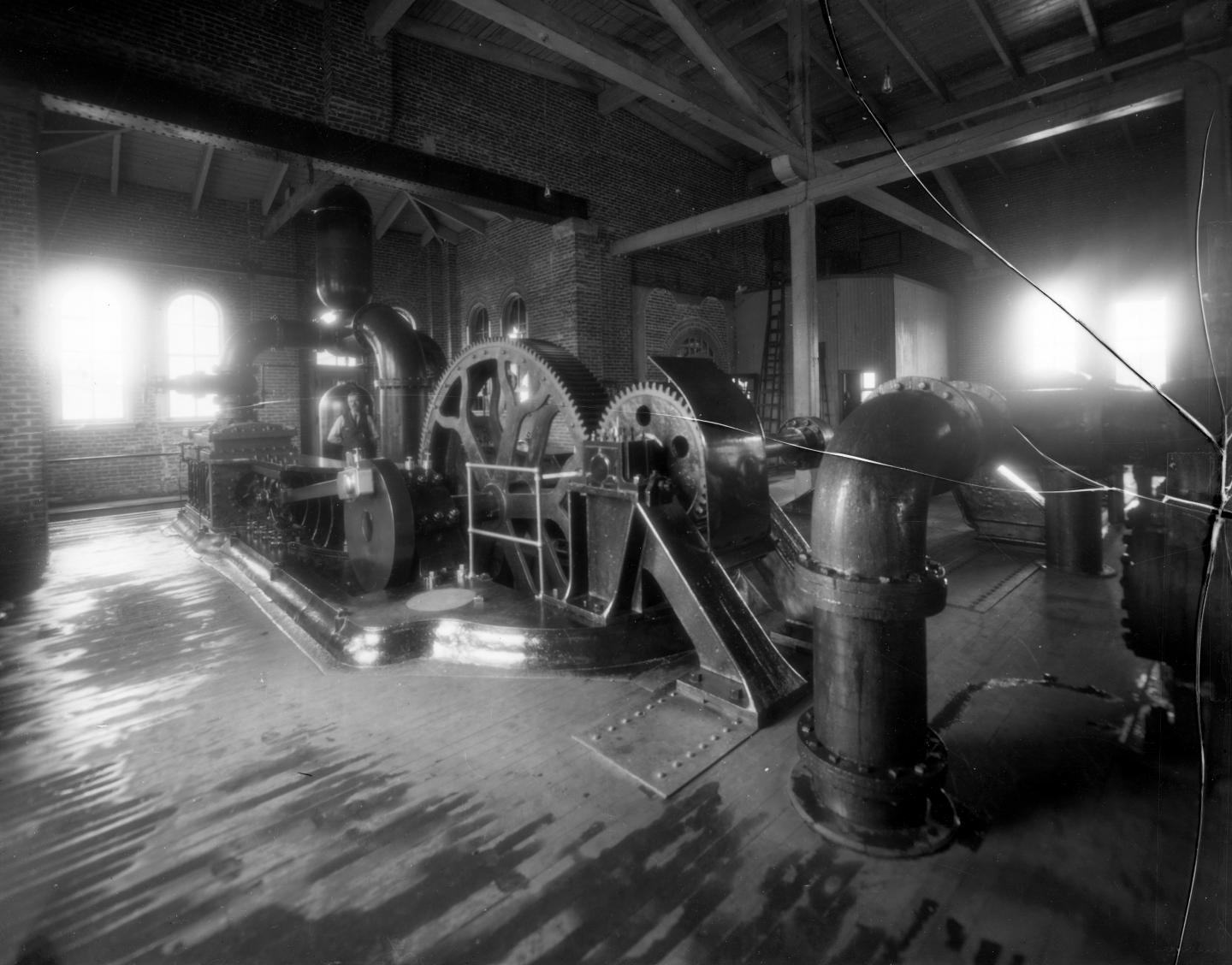
    <summary type="html"><![CDATA[<p><strong><em>"When the Well’s dry, we know the Worth of Water." - Benjamin Franklin (Poor Richard's Almanac, 1746)</em></strong></p><img src="https://spokanehistorical.org/files/fullsize/be4cf2bb9d35a6314d88feb45de5ee2f.jpg" alt="&quot;The Big Pump,&quot; original water pump for the city of Spokane. " /><br/><p>James Liston became an employee of the water department in 1890, moving up the ranks over the years to become the city's chief "wrench artist." While water department superintendents wrestled over budgets and permits in City Hall, Liston's job was far more hands-on. In 1912, the Spokesman-Review said of him, “When Liston entered the service of the water department he dug the trenches, made the connections and turned the water on himself. Of late years it has required a dozen men to take care of this work.” Over a career spanning 22 years, James Liston single-handedly connected thousands of Spokane homes to city water, one pipe at a time. </p><p>City directories indicate that Liston lived in various boardinghouses on Riverside Avenue until the Pedicord Hotel opened in 1895. He promptly took rooms in the new hotel and lived there for the rest of his life. He never married or had children, and his family consisted of one sister who remained in Ireland. </p><p>Fortunately, this era offered many social opportunities for an unmarried man who was outgoing and civic-minded. Liston became part of a trio of friends based at the Pedicord, with the other two members being the hotel’s manager, Frank S. Donaldson, and John Osterberg, manager of the nearby Sam Crowe Furniture Company which was co-owned by T. J. Pedicord. Although their daily interactions are unrecorded, their names often appear together in articles about minor social events, such as a “duck supper” in 1910. In 1912, Donaldson, Osterberg, and Liston took a two-week fishing excursion together “in the vicinity of Marcus.” Donaldson described their vacation to the Spokesman-Review as “a most delightful trip” and marveled that residents of Spokane would travel to distant locations when “some of the grandest scenery and the finest hunting and fishing to be found anyplace” was “almost at their doors.”</p><p>Liston was also friendly with the hotel’s owner, T. J. Pedicord. At Pedicord’s 51st birthday celebration in 1910, several of his friends performed in a talent show: some recited poetry, some sang, and a Confederate veteran shared his experiences at Vicksburg. Liston, drawing on his own unique experiences, “gave a short talk on ‘The Danger of Microbes in Water’ and cautioned those present about taking too many chances in drinking water that had not been first been run through a sieve. He also related a few thrilling water-wagon experiences.” The event was a great success and Pedicord declared his intent to have “another one just like it on my ninetieth birthday.” </p><p>Like many of Spokane’s pioneer residents, Liston was an immigrant. He originally was born in Ireland and became a naturalized American citizen on April 19, 1894. His choice of fraternal organizations suggests that his Irish identity was important to him, as was his work: he was a member of the Ancient Order of Hibernians, the Foresters of America, the Knights of Columbus, the Irish-American Society, and the Inland Empire Water Association. </p><p>On December 6, 1912, Liston woke up in his room at the Pedicord Hotel, dressed, and went downstairs to the lobby. He “greeted the clerk in his usual congenial way” and remarked that he was feeling “unusually well.” He then sat down in his favorite chair, in his “usual corner,” to read the morning newspaper. A few minutes later, the newspaper dropped from his hands and he slid from his seat to the floor. He was already dead by the time the hotel staff reached him, taken at age 51 by heart failure.</p><p>Liston’s passing was front page news for both the Spokane Press and the Spokane Chronicle. He had worked for the city for 22 years, and “during all of that time, Liston had had charge of turning on and off of water taps.” At the time of his death, he was one of the longest-tenured city employees. Only a few days before his death, Liston had spoken to the Spokesman-Review about his perspective on Spokane’s development over the years:</p><p><i>"When I think of different periods through which the water department has passed in the 21 years I have been with it, talk of quiet times amuses me. The water department is a good barometer of the prosperity of a city, and conditions in Spokane department today are better than they were a year or even six months ago. [...] W</i><i>hen we consider what this department has passed through in its time the present year will be numbered among the most prosperous ones in its history. I remember the time when some who are millionaires today could not pay their water bills, and it fell to my lot to cut them off. Some of these men still remember me and are glad to recall the days when we became acquainted through the medium of a cut-off wrench. When compared with those days the water department is now enjoying the bonanza era of its existence."</i></p><p>James Liston viewed Spokane through the lens of its water system, and it is clear that he very much liked what he saw. He was a man of such “sunny character” that he could make friends with someone even as he shut their water off, and a man who found his work so fascinating that he would present a lecture about water microbes at a friend’s birthday party. There are still thousands of homes in Spokane today that Liston personally connected to the city water system. They are his greatest monument.</p><p><em><strong><a href="https://spokanehistorical.org/items/show/971">For more (including 6 images) view the original article</a></strong></em></p>]]></summary>
    <published>2026-08-18T19:24:28+00:00</published>
    <updated>2026-08-25T04:57:02+00:00</updated>
    <link rel="alternate" type="text/html" href="https://spokanehistorical.org/items/show/971"/>
    <id>https://spokanehistorical.org/items/show/971</id>
    <author>
      <name>Liz Wood</name>
    </author>
  </entry>
  <entry>
    <title type="html"><![CDATA[Spokane&#039;s Tiger in the Ring: The story of legendary boxer Tiger Jack Fox and his manager, Al Morse. ]]></title>
    <summary type="html"><![CDATA[<p><strong><em>Tiger Jack Fox "stalked his foes like a panther and he swung like lightning from half way to his knees." When he agreed to be managed by rookie promoter Al Morse, a partnership was formed that would change Spokane and boxing forever.</em></strong></p><img src="https://spokanehistorical.org/files/fullsize/a26d6f9ff5c728fd591d262c554dc0c8.jpg" alt="TigerJack Fox in his prime, boxing in Spokane. His wide stance and hands held low were both parts of his signature style. " /><br/><p>This story starts on the other side of the world from Spokane, when the emperor of Russia was assassinated by revolutionaries in 1881. The attack was unjustly blamed on a Jewish conspiracy and resulted in brutal pogroms being unleashed on the Jewish communities of Eastern Europe. Millions left their homes behind to escape the violence, knowing they would never return. Many came to America, and most landed in New York City. </p><p>Among that wave of Russian Jewish immigrants were Alfred “Al” Morse and Sarah “Sadie” Brandvein. Sadie was just seven years old when her family came to America, while Al was only two. As young twentysomethings, they married in New York City. By 1905, they were living with Sadie’s sister Bessie in a tenement apartment in Hell’s Kitchen. It was a neighborhood just as crowded and tough as the Lower East Side, but they stood out among their neighbors now rather than blending in – most people living in Hell’s Kitchen at the time were working-class immigrants from Germany, Italy, and Ireland. </p><p>Their next move would take them into even more unfamiliar territory: Al and Sadie Morse arrived in Spokane, Washington around 1909. Al worked as a kitchen steward at the Davenport and held various jobs over the years, including hotel clerk and salesman. The Morses also operated the Gardner Apartments (W. 217 Third) and the Sharon Apartments (S. 625 Stevens). Around this time, both Al and Sadie began claiming to be natural-born United States citizens of Russian immigrant parents. They would maintain this fiction in public records until their deaths, although we do not know whether it extended to their private lives. </p><p>Sadie's sister, Bessie, also came to Spokane around this time with her husband, Charles M. Lewis. The sisters’ husbands went into business together, operating a combination employment agency, cigar store, soft drink shop, and "working men's club" at N. 221 Stevens. Sources indicate that the club had originally served alcohol, but had made the mistake of opening in 1915, just one year before Washington State implemented statewide prohibition. </p><p>The two couples lived and worked closely together until 1932, when Charles’s health declined. He and Bessie went to Los Angeles, in the hopes that the gentler climate would help Charles to recover. Instead, Charles died in 1933. He left his share of their business to Al and the rest of his estate to Bessie.</p><p>The Morses had lived relatively quiet lives in Spokane for decades at this point. They worked hard, they saved their money, they volunteered, they occasionally donated to fundraisers for Jewish causes. They were now in their early fifties. Most people in this chapter of life wouldn't consider starting a career as a nightlife impresario and boxing promoter. But most people aren't Al Morse. </p><p>For many years, Al Morse had dreamed of running a proper club. More than just some soft drinks and cigars at the back of an office, he wanted his club to have "a barber shop, cafe and card tables [...] a reading room, a picture show, pool room, and everything that goes in a club atmosphere." Now, not only did he have the means to open a club, but nationwide prohibition was about to be repealed. It was finally time for his dream to become a reality. </p><p>In 1934, Al Morse opened the Workingman's Athletic Club and the Lewis Card Room at 425 W. Main. The reading room and picture show proposed in Al's original plan were now a boxing ring, wrestling mats, showers, and sports equipment. The card tables and pool tables stayed, and of course, there was a bar. </p><p>The Workingman's Athletic Club was soon hailed as one of the best gyms in the Northwest. Sportswriter Jimmy Bolin enthused, "What Spokane needs is a first-class gym where fighters can work out. That statement has been made to the writer by every fight manager that has appeared here over a long period. And at last it has come to pass." </p><p>Of course, a boxing gym's reputation is built on the boxers who train there. Fortunately for Morse, a boxer named John Lynwood Fox – better known as “Tiger Jack Fox” - visited Spokane for a bout in late 1934. Fox, a man of murky background but unquestioned skill in the ring, agreed to let Morse be his manager. It's unclear how Morse won Fox over, given that he’d never managed a boxer before, but Fox was later noted as saying that Spokane was "the first place he ever found where he got all the money that was coming to him." </p><p>Thanks to the pairing of Morse and Fox, Spokane was soon a first-rate “fight town.” Sportswriter Jimmie Hungate said, "The public in Spokane owes [something] to Al Morse and the battle he has put up to make Spokane the fight center of the northwest. He has accomplished this feat. Spokane is right now the best fight town on the Pacific Coast, with the possible exception of Hollywood." As Tiger Jack Fox's star rose and Al Morse's rose with it, the Lewis Card Room and the Workingman's Athletic Club became simply the Al Morse Club and Gym. </p><p>While the gym side of the business was praised, the card room’s reputation was checkered. It was regularly raided by law enforcement as a haven of illegal gambling. Al gamely denied these allegations and claimed that his card room operated much like a Chuck E. Cheese does today: he only let his customers play with in-house tokens or "hickeys,” for amusement purposes only. His tokens were never supposed to be exchanged for cash, alcohol, or tobacco. Law enforcement was unconvinced by his protests, and continued to descend on the card room at regular intervals. At least one raid turned up locked drawers of real cash concealed inside the card tables, right where the dealers could reach them. </p><p>In 1938, a sore loser sued Morse for the return of $2803.50 that he had lost over a three-year span gambling in the card room. Under Washington State law, if it could be shown that Morse had taken that money through illegal gambling, it was possible that Morse could be forced to repay it in full. Morse, however, had bigger things to worry about that winter. Four years into their partnership, Tiger Jack Fox was now recognized as one of the best boxers in the country. John Henry Lewis had abandoned his light-heavyweight belt in order to move up a class and try to take the heavyweight title from Joe Louis. A tournament had ensued to find the new light-heavyweight champion, and Fox was only one fight away from the title. He and Melio Bettina were set to battle in New York City in December of 1938. </p><p>In typically chaotic fashion, the potential light-heavyweight champion spent his December in a hospital bed instead of the ring. Fox had taken a woman named Edna Boyd to his hotel room in Harlem, and Edna had stabbed him in the chest with a ten inch blade. According to him, she did it when he was sleeping for no reason. According to her, it was a necessary act of self-defense. Fox was taken to the hospital in critical condition, having suffered severe blood loss. The doctors said that his boxing career was over. Fox and Morse disagreed. </p><p>By February of 1939, Tiger was back on his feet and back in the ring, boxing Bettina in Madison Square Garden for the light-heavyweight title. After eight thrilling rounds, Tiger succumbed to a technical knockout in the ninth. For the rest of his life, Fox attributed the loss to the effects of an "evil eye" placed on him by Bettina's manager, a Las Vegas hypnotist and magician named Jimmy Grippo. </p><p>The championship fight was the high point of the partnership between Fox and Morse, and it also was the beginning of the end. By 1940, Al Morse was ready to leave the boxing world behind. He continued to own the gym and card room, but he no longer managed boxers. Details from intermittent raids on the card room seem to suggest that Morse relied on a manager to run the place in this era  (and that it continued to skirt the gambling regulations). </p><p>Tiger Jack Fox announced his retirement many times, but seemed to find it impossible to stay out of the ring, even as his hair turned gray. (Fox's actual age was unknown, but he was widely thought to be older than he claimed.) In 1950, he abruptly collapsed in a Twin Falls, Idaho boxing ring. It was later found that he had suffered a hernia after a blow to his abdomen. His boxing days were over, but it soon became clear that John Lynwood Fox had never made a plan for what to do once he wasn’t “Tiger Jack.” He had no money saved and no post-boxing plans. In 1951, only months after his retirement, he was found near death in his hotel room after a severe stroke. He was taken to Sacred Heart in critical condition. </p><p>Al Morse had been out of the boxing game for years, but in ’51, he came out of retirement and helped arrange one last bout: a benefit fight to raise funds for Tiger. That August, Kid Riviera of Chicago and Willie Bean of Los Angeles went ten rounds in the outdoor arena at Ferris Field. Nearly 4,800 people were in attendance, including Tiger Jack Fox himself, seated ringside between two hospital attendants. While the win went to Riviera, the match failed to live up to expectations. The Spokesman-Review lamented that while the match was "a topnotch smasheroo on paper, [it] turned out to be no more than a half-hearted dancing exhibition, reminiscent of a ballroom class at Miss Pringle’s school for young ladies."</p><p>As well as being a disappointing fight, it was a disappointing fundraiser. Although the event raised nearly $10,000 at the gate, most of the money went to taxes and the costs of putting on the fight. Only about $1300 was left for Tiger’s use. It was put into a trust fund and managed by Carl Maxey. While Maxey has gone down in history as a groundbreaking civil rights leader and attorney, Spokanites in 1951 knew him as the undefeated NCAA boxing champion “King Carl.” </p><p>If nothing else, the match helped keep Fox’s name in the news, which in turn helped let his fans know where to find him: in the nursing home, slowly recovering. In December 1951, a newspaper article mentioned that he had asked his nurse to convey his thanks to the dozens of people who had sent Christmas cards and gifts. In February 1952, he was well enough to attend a boxing match at the Armory, where the crowd gave him “the biggest cheer of the night.” </p><p>Fox eventually recovered enough to leave the nursing home. He spent his remaining years at the home of Mrs. Alice Freeman, a North Carolinian by birth who moved here in 1904 and became the matriarch of one of Spokane’s largest and most accomplished Black families. “Mother Freeman” had often provided room and board for Fox during his twenty years in Spokane, and he could not have found a better home base. The Chronicle described her as Fox’s biggest booster. </p><p>On April 6 of 1954, the end came for Tiger Jack Fox. He was living a quiet life now, looked after by Mrs. Freeman and reliably seen in attendance at every boxing match in town. While his step was slow and he used a cane, he often walked to a nearby budget movie theater to pay his quarter and enjoy the triple feature. That morning, Tiger had just bought his ticket when a heart attack struck and ended his life on the spot. “He stalked his foes like a panther and he swung like lightning from half way to his knees,” the Chronicle said in its eulogy. “Spokane liked the old tiger, and many an eye dimmed in present months to see him dragging along the street with the aid of a cane while fame and fortune took the crowds to see other fighters, some of whom were not fit to have climbed into the same ring with him when he was going strong. Old fighters have no standing, save in the record books, and by that measure Fox stood up with the best of them.”</p><p>Fox had died penniless, but Spokane’s boxing community wasn't going to abandon him to a pauper’s grave. Naturally, they organized a benefit boxing match in his honor to raise funeral expenses. His funeral was held at Our Lady of Lourdes Cathedral and he was laid to rest in Spokane’s Holy Cross Cemetery. Famed boxer Joe Louis later visited Mrs. Freeman at her home and thanked her for looking after Fox, “tucking a $100 bill in her pocket as he left.” In 2023, Tiger Jack Fox was posthumously inducted into the International Boxing Hall of Fame. </p><p>Al Morse’s name was missing from the ranks of those who organized Fox’s funeral and carried his coffin. Like his old fighter, Morse had also suffered a stroke and was partially paralyzed. He finally sold off the business for good in 1955 and died three years later. Sadie would live on until 1972. They are buried together in Fairmount Cemetery in Spokane. </p><p>On the surface, Fox and Morse could hardly have been more different: a Black American light-heavyweight who “carried his fists like suitcases” and an Eastern European Jewish immigrant who stood all of 5’4” tall. But at the moment in 1934 that their paths first crossed, they shared some important similarities. Both men had reinvented key parts of their biographies – Tiger spent decades concealing his real date of birth, and Al spent decades concealing his immigrant origins. Both had big dreams, and both were considered a little too old to be dreaming so big. Yet somehow, together, they made those dreams come true. Al Morse turned Spokane into a first-rate fight town, and he managed Tiger Jack Fox all the way to Madison Square Garden for a championship bout. It was a short but unforgettable run that changed both their lives. </p><p>The two men also shared another important thing: while neither began his life anywhere near here, both of them ended up calling Spokane their home. </p><p><em><strong><a href="https://spokanehistorical.org/items/show/970">For more (including 9 images) view the original article</a></strong></em></p>]]></summary>
    <published>2026-08-13T18:56:25+00:00</published>
    <updated>2026-08-18T15:42:41+00:00</updated>
    <link rel="alternate" type="text/html" href="https://spokanehistorical.org/items/show/970"/>
    <id>https://spokanehistorical.org/items/show/970</id>
    <author>
      <name>Liz Wood</name>
    </author>
  </entry>
  <entry>
    <title type="html"><![CDATA[The Legendary  Chinese Cemeteries of Browne&#039;s Addition: Is the first Rosauer&#039;s  Supermarket really built over Chinese graves? ]]></title>
    <summary type="html"><![CDATA[<p><strong><em>One popular Spokane urban legend is the tale of a Chinese cemetery buried under the Rosauer's Supermarket in Browne's Addition. This story has recently been doing the rounds on social media platforms with a little help from ChatGPT and Gemini. Some who tell the story these days claim that "bodies and bones were removed," while others say that the building was built on top of the bodies. What's the truth behind the legend?</em></strong></p><img src="https://spokanehistorical.org/files/fullsize/146e681d18aa92f9464e9822e76bed6e.jpg" alt="An 1897 newspaper illustration of a Chinese cemetery (presumably near Chico, California). " /><br/><p>There is a real history of Chinese burial sites in Browne's Addition which may explain this legend. The following facts provide important context: </p><p>1. Like many Western towns at the time, Spokane had a significant population of Chinese immigrants in the 1880s. There were several hundred Chinese residents of Spokane before the fire, mostly young men who wanted to earn money overseas before returning home to settle down. They primarily resided in the area of Front Street (now Spokane Falls Boulevard) near Stevens Avenue. Developer W. C. Gray built "a row of five frame buildings" in this location in 1885, in an effort to "move Chinatown as far away from the center of the city as possible." Given the limited housing options available to Chinese people in Spokane, this strategy was an effective way to concentrate the population - although Spokane's rapid growth meant "Chinatown" was soon squarely in the middle of the busiest part of downtown. </p><p>2. In the early years of Spokane, there were no large perpetual-care community cemeteries. Fairmount Cemetery (today Fairmount Memorial Park) and Greenwood Cemetery (today Greenwood Memorial Terrace) were originally founded in 1888. Both were located at a distance from the city and had room for thousands of graves. People could purchase plots for their loved ones and receive a guarantee of ongoing cemetery maintenance from the managing organization. This stood in contrast to the existing pioneer and church cemeteries, which often used smaller patches of private land and had limited capacity. </p><p>3. Re-burial was more common in the 19th century than today. In the 21st century, the idea of moving a body from its final resting place is typically seen as something to be avoided unless absolutely necessary. To Americans in the 19th century, "translation" (as they called it) wasn't necessarily such a big deal. Cultural expectations around mortuary customs were changing rapidly, thanks in large part to the Civil War, which meant that many people were dying far from their homes for the first time in our history. </p><p>4. Most Chinese immigrant laborers who died in the United States in the late 19th century were buried temporarily on American soil, then disinterred and repatriated to China a few years later. Bronson & Ho explain the emergence of this custom in their 2015 book, <i>Coming Home In Gold Brocade: Chinese in Early Northwest America:</i> "The custom called by anthropologists 'secondary burial,' whereby the bones of the dead are exhumed, cleaned, and then buried again, has long existed in Guangdong and adjacent parts of southern China. [...] The idea caught on quickly in North America. Although uncommon among overseas Chinese in some regions - it never seems to have become a regular practice of Chinese sojourners in Malaysia and South America, for instance - in the western U.S. and Canada the exhumation of the dead soon became an essential part of migrant workers' culture. When they arrived on the American side of the Pacific, they were told that burial back home was imperative in traditional Chinese culture. They may or may not have known this beforehand, but now they were obliged to buy a 'departure ticket,' which would pay the cost of repatriating bodies in case they died before returning home." (Bronson & Ho, p. 224-225)</p><p>One of the earliest mentions of secondary burial in Spokane newspapers is in 1890, when a Spokane Chronicle article mentions that agents have come to town in order to locate and repatriate the bodies of four railroad workers who were buried "not far from Hangman Creek." The article indicates that the "stated number of years" during which the bodies were supposed to be interred had expired in 1889, but does not specify when they were originally buried. This practice continued at least through 1926, when beloved Spokane doctor Hoy Chong Gar of the Wing Wo Medicine Company was interred in a vault in Fairmount: "Chinese delicacies were left on the steps of the vault, in which the body will remain for two years. At the end of that time it will be taken to China, accompanied by the family, where it will be buried." </p><p><h3>The Real Chinese Cemeteries of Browne's Addition</h3>
</p><p>Recollections of three early Spokane pioneers indicate that there were two locations within Browne's Addition where Chinese laborers were temporarily buried in the 1880s before being exhumed and repatriated to China. The earliest source is an article in the 1924 Spokesman-Review and its associated advertisement:. "Do You Remember: The Chinese cemetery? The Peaceful Valley slide? The racing stables? The old schoolhouse?" Two days later, Mrs. Mannheim's article was published: "Browne's Addition, my childhood home, was redolent with the odor of young pine forests and carpeted with wild flowers when I first saw it in spring of the year. [...] The old cemetery on the promontory at the foot of Second and Pacific avenues was Chinese, we were told, and we felt both awed and curious as we stepped about the shrunken graves. One of Spokane's fine homes now adorns this entire section." </p><p>The two later sources are Daniel H. Dwight and Lyman Reed, who arrived in Spokane in 1887 and 1888. In 1948, both Dwight and Reed were interviewed by writer Aubrey L. White for the Spokesman-Review. White said: "Recently on meeting D. H. White, one of Spokane's builders (who was here when I came in 1888), we were talking of the days just before and after the great fire of 1889 and he recalled the early-day funeral ceremonies of the Chinese here. They were buried with great pomp at what is now the end of Pacific Avenue." </p><p>Dwight went on to describe the Chinese funerals that he observed during his first years in Spokane, adding that, "We were informed that as all Chinese want to have their bones rest in their parental home, every few years these Chinese bodies were exhumed and the bones prepared properly and later shipped back to China." </p><p>White next interviewed Lyman Reed, a man who had grown up in Browne's Addition. According to White, "Lyman Reed readily recalled the old graves and gave me some of his remembrances of the burials." He quoted Reed as saying, "Shortly after J. J. Browne platted Browne's addition [...] our family moved to Spokane and my father purchased two lots at the northwest corner of Second avenue and Elm street. On that property he at once built a house, the fourth house to be erected in the district. I at once became acquainted with the Browne children and the oldest, Guy, and I were soon bosom friends and in playing roamed all around that end of town. [...] The entire tract was fenced and just inside of the fence at the end of Pacific avenue there were six or possibly seven graves, most of them enclosed by white picket fences. I was told that they were the graves of Chinese. A couple of years later the bodies were removed and I believe the bones were shipped to China." </p><p>Reed continued, "Later there were several Chinese burials on the Northern Pacific right of way south of the tracks and between Ash and Oak streets. Those Chinese funerals made a great impression on the boys in my crowd because all the Chinese in town would attend in carriages headed by a band. They would place roast chicken and all sorts of food on the graves so that the departed would have something to eat on their journey. Also joss sticks would be placed around the graves and many narrow strips of paper bearing Chinese characters and perforations would be scattered about." </p><p>Aubrey White then went to interview "some of the Chinese business men in the alley between Main and Trent, where I formerly knew the owners and bought Chinese ginger." They affirmed the secondary burial custom and explained some of the funeral traditions, although White noted that "the men are all now very modern, very well dressed and speak excellent English. They said they could tell me very little of the old customs as they are not followed now." The fact that White did not ask these businessmen anything about the Browne's Addition Chinese cemeteries seems to support the theory that they were long gone. </p><p>Given that 2 to 3 years is typically noted as the desired span between interment and disinterment in these cases, it seems very unlikely that any Chinese burial locations were still occupied in Browne's Addition by 1900. The need for a temporary resting place before returning to China was now being met by Fairmount and Greenwood. Browne's Addition, on the other hand, needed room to build and grow. </p><p><h3>The Development of Browne's Addition</h3>
</p><p>Daniel Dwight didn't have many neighbors when he first moved to Browne's Addition, but before long, he was surrounded by some of Spokane's most striking and notable historic homes. These include the Patsy Clark Mansion (1897), the Finch Mansion (1897), and the Campbell House (1898). There is no other place in Spokane where so many historically significant homes are grouped within just a few blocks, and the district is recognized today for its historic significance at both the city and national levels. </p><p>As the Gilded Age gave way to the 20th century, some of the prosperity drained away from Browne's Addition. Many of the large mansions were converted to apartments, and new construction after 1910 trended toward single-story cottages, bungalows, and multi-family units. The Browne's Addition nomination to the Spokane Register of Historic Places titles the section on 1910-1950, "Living Together, Living Modestly." While hardly a slum, it was no longer the Millionaire's Row that it had been at the turn of the century. It was in this era of the neighborhood that J. Merton "Mert" Rosauer opened his first Rosauer's supermarket in 1949, located on the corner of Third and Oak. </p><p><h3>Where were the Chinese cemeteries and what happened to them?</h3>
</p><p>Reed describes Browne reserving "a large tract at the west end of the addition for his own use. The tract included everything west from Chestnut street and between First and Riverside avenues, and all the rest of the addition lying west of about where Coeur d'Alene street is now located. The entire tract was fenced and just inside of the fence at the end of Pacific avenue there were six or possibly seven graves, most of them enclosed by white picket fences." This aligns with Mannheim's description of the cemetery as "on the promontory at the foot of Second and Pacific avenues." Based on their descriptions, the Pacific Avenue cemetery location with the white picket fences was close to the entrance of the Ridge Gated Condos today. </p><p>The second location, described by Reed as "on the Northern Pacific right of way south of the tracks and between Ash and Oak streets," is not within the bounds of Browne's Addition as they are typically recognized today. This edge of the district has always presented problems, as it abuts one of the major pathways into Spokane's downtown from the west. In the early 1900s, it was the West Road and the Northern Pacific railroad tracks. In the early 1910s, it was heavily regraded to create the new Sunset Highway (now known as Sunset Boulevard). It has since been reconfigured and re-graded several times to facilitate increased traffic. (None of these upheavals led to any reported body discoveries.) </p><p>Given the close proximity of Sunset Boulevard, the train tracks, and I-90, the area "south of the tracks" between Ash and Oak is an odd slice of land primarily used for commercial and industrial purposes. If we can place the original location of this second Chinese cemetery anywhere today, it is probably closest to being under the IntelliTect parking lot. However, as discussed earlier, there is no reason to believe that either of these two Chinese cemetery locations were occupied long-term. The balance of probabilities suggests that these bodies were removed and repatriated in accordance with the wishes of the deceased. If so, then anything built on those sites is merely built on a place where some bodies used to be - a distinction shared with many other Spokane buildings. (See "What's Under The Driveway? 19th Century Cemeteries in Spokane, Washington" on YouTube for more.) </p><p>Readers may have noticed that there is a gap of approximately fifty years between the last attested Chinese graves present in Browne's Addition and the construction of the first Rosauer's supermarket. The land in question did not lie fallow before the grocery store arrived. As of 1902, it was home to the W.J. Slater family. The Slater home continued to be used as a residence through the 1940s, when a used car lot is listed at that address. In other words, not only do we know that Rosauer's wasn't built on either of the locations identified as former Chinese cemeteries, we also know exactly what it <i>was</i> built on top of.</p><p><h3>Legendary Implications</h3>
</p><p>Although this urban legend centers on dead Chinese people in Spokane, the living ones never seem to be mentioned. Suggesting that Chinese bodies could be bulldozed without complaint not only implies an extreme degree of callousness from the theoretical white property developers, it also implies utter silence, ignorance, or complacency from the theoretical Chinese residents of Spokane. </p><p>None of this rings true to historical reality. Despite being deprived of essential rights by laws like the Chinese Exclusion Act and the Alien Land Law, there have always been Chinese people living in Spokane and they have always taken good care of their dead. Even though newspapers used derogatory terms and a mocking tone when describing Chinese funerals in Spokane, it is clear from these articles that Spokane's early Chinese community treated its deceased members with dignity and respect. Even lepers, those who died penniless, and those who died from drug overdoses or suicide were provided with proper burials. As stated in Bronson & Ho (2015): "The typical early Chinese male immigrant did not die quietly, unnoticed, or forgotten. The rituals at and after his death were probably the most noticeable public events of his life" (p. 215).</p><p>Throughout the late 19th and early 20th century, Spokane even had a series of "mayors of Chinatown" who served as the liaisons (and fixers) between the Chinese community and City Hall. If the designated agents had never come to retrieve the bodies from the Chinese cemeteries in Browne's, a quick visit to the mayor of Chinatown would have ensured the bodies were swiftly disinterred and relocated - although depending on who was mayor at the time, the bodies may have taken a short and cheap trip to Fairmount or Greenwood rather than a long and expensive trip to Hong Kong. </p><p><h3>Conclusion</h3>
</p><p>Of course, anything buried can be forgotten and lost to time. The four men who were interred "not far from Hangman Creek" may never have been located. Human error and human greed can lead to situations where bodies are misplaced, mishandled, covered up, or destroyed. There are never conclusive and final answers in history, just answers that represent the best we can do with the facts that we have now.
But in the case of the Chinese cemeteries of Browne's Addition, we have no evidence to suggest any narrative other than the most straightforward: there were two locations in Browne's Addition in the late 1880s and early 1890s where perhaps a dozen Chinese men in total were buried for a few years. Their bones were exhumed and returned to China, just like thousands of other overseas Chinese who died in the American West at the time. The land where they had briefly rested was turned over to other uses once it was no longer needed for that purpose. There were no gravestones being bulldozed, no sacred ground being defiled, and certainly no bodies to hide. And on top of all that, neither site was where Rosauer's stands today.
</p><p>The Chinese men who were buried in Browne's Addition, however temporarily, were actual human beings. They were probably quite young and they died far from their homes while following their dreams of a better life. They wanted to have their bones returned to their native soil, and all evidence suggests that their wishes were fulfilled. Somewhere in China, there may still be families performing rituals and remembrances for them. They were Spokane pioneers in their own right, and they deserve to be remembered as more than props for a ghost story.</p><p><em><strong><a href="https://spokanehistorical.org/items/show/969">For more (including 4 images) view the original article</a></strong></em></p>]]></summary>
    <published>2026-08-07T17:38:38+00:00</published>
    <updated>2026-08-31T07:52:05+00:00</updated>
    <link rel="alternate" type="text/html" href="https://spokanehistorical.org/items/show/969"/>
    <id>https://spokanehistorical.org/items/show/969</id>
    <author>
      <name>Liz Wood</name>
    </author>
  </entry>
  <entry>
    <title type="html"><![CDATA[The Columbia Pharmacy and the Kiyohiros]]></title>
    <summary type="html"><![CDATA[<p><strong><em>For 86 years, the southwest corner of Main Avenue and Washington Street was home to one of Spokane's oldest pharmacies. </em></strong></p><img src="https://spokanehistorical.org/files/fullsize/f32b058835ef9416d1705ad1b5a79eeb.jpg" alt="Leo Kiyohiro in the doorway of the Columbia Pharmacy, 1988. " /><br/><p>The Columbia Pharmacy originally opened its doors in 1900 on the northeast corner of Washington Street and Main Avenue. In 1901, its proprietor announced his plans to move into a building that was under construction on the southwest corner of the same intersection. Columbia Pharmacy was in operation on its new site by 1902, and would remain at the same location for the next 86 years.
Early Columbia Pharmacy managers included J.C. Auen, his wife Mary Auen, Charles L. Holt, Henry George Duerfeldt (1914-1922), and his son Theron Duerfeldt (1934-1942). Harry G. Gleason was the next manager, followed by Leo Yukio Kiyohiro in 1952. Kiyohiro would become the Columbia Pharmacy's last and longest-serving owner.</p><p>Leo Kiyohiro and his wife, Yuriko, were among the many Japanese Americans who came to Spokane in the 1940s because of Executive Order 9066. Created in response to the attack on Pearl Harbor, this was the infamous order that led to the mass displacement and incarceration of Japanese Americans. People of Japanese ancestry living in the designated West Coast Exclusion Zones were required to “evacuate” inland. While early stages of this plan allowed voluntary relocation, it soon became mandatory. More than 100,000 ethnically Japanese people were removed from their homes and incarcerated in military “relocation centers.” </p><p>Spokane was one of the few major cities on the West Coast that was outside the exclusion zone, and it already had an existing Japanese American community. As a result, Spokane became a relatively safe haven for Japanese immigrants and Japanese Americans during and after World War 2 - although they still experienced prejudice, suspicion, and legalized harassment here. </p><p>Leo Yukio Kiyohiro was born in Portland, Oregon. His family lived in Yamaguchi Ken, Japan, from 1915-1926, then returned to Oregon when Leo was around twelve. After finishing high school, Leo enrolled in the North Pacific College of Oregon and graduated with a pharmacy degree in 1937. He followed this up with a Master of Science degree from Oregon State College in 1938. Although the Kiyohiros had lived in Portland for many years, they could not safely stay there during the war. In 1942, Leo and his family moved to Spokane.</p><p>Yuriko Kimura was born in Sacramento, California in 1922. According to government records, she was held at the Amache Relocation Camp near Granada, Colorado and later at the Tule Lake Camp in California. Her obituary says that she “was introduced to her beloved husband, Leo Kiyohiro” while she was in the camps. This is intriguing, because Leo spent the war outside the exclusion zone and was never interned. There were other people named Kiyohiro interned at Tule Lake, so perhaps one of Leo’s family members or friends suggested that they write to each other. After the camps were closed, Yuriko traveled to Chicago to attend the Ray-Vogue School of Art in Chicago, where she studied fashion and dressmaking. She later joined the Kiyohiro family in Spokane and married Leo in October of 1945 at the Davenport Hotel.</p><p>Leo’s first drugstore in Spokane was the Pioneer Drug Company at W. 326 Main Avenue, which he began operating in 1942. After their marriage, Yuriko joined him in the family business. In addition to the usual medicines, snacks, magazines, and gifts, they sold imported items from Japan such as dolls, lanterns, vases, and Japanese-language media like books and records. Leo also participated in the great mid-century Spokane tradition of league bowling, and Pioneer Drug’s all-Japanese team was one of the best in town.</p><p>In 1952, Leo purchased the Columbia Pharmacy at W. 401 Main. The Kiyohiros would run this business together for the next 36 years. An article from 1988 describes it as "a throwback to the 1950s. Its narrow aisles, glass display cases and tiled floors make it a time capsule of sorts. An aging cardboard cutout of the Philip Morris boy stands in one corner." The Kiyohiros advertised their shop as "Oriental gift headquarters," describing their wares as, "Different, distinctive, reasonable!" The Spokesman-Review noted that it was, by the late 1980s, "one of the few places in town where Japanese-Americans can find Japanese books and Oriental gifts." </p><p>Outside of work, the Kiyohiros were founding members of Spokane’s first Buddhist church. (In this era, American followers of Jōdo Shinshū Buddhism usually used the term “church” instead of “temple.”) This faith community originally met in a house at S. 628 Cowley, and in 1965, they purchased a empty church on the corner of Perry Street and 10th Ave to be their new home. Leo served as the church's spokesman and often was interviewed in the paper when they held events open to the public. For many 20th-century Spokanites, this church’s fundraisers were their first chance to try Japanese foods like sushi, udon, and mochi. Although a fire in the 1990s destroyed the original building, there is still a Spokane Buddhist Temple at 10th and Perry today.</p><p>In his role as spokesman for the Buddhist church, Leo had the annual task of explaining the Obon Festival to the Spokane newspapers. "Although Obon is a memorial festival honoring the memory of the deceased, a festive mood pervades the entire gathering. The sense of loss of our loved ones is strong in our hearts, but our faith in Buddha's wisdom and compassion is even stronger," he said. "Deep down in the heart of every Buddhist, there is the feeling of thankfulness, of gratitude to those who made our lives possible."</p><p>Over the years, the Columbia Pharmacy saw tremendous changes in how medicine was made, sold, and used. In 1900, medicines were essentially unregulated in terms of what they could claim to cure and what they were allowed to contain. Washington State College (later University) had only graduated its first pharmacists in 1898, and it was not until 1923 that registered pharmacists in Washington State had to be graduates of "recognized colleges of pharmacy." Before 1938, there was essentially no distinction between "prescription" medications and "over the counter" medications. Although the pharmaceutical industry offered an increasing number of standardized, pre-made drugs, it was still common for pharmacists to prepare and sell their own medicines well into the mid-20th century. Offerings sold at the Columbia Pharmacy over the years included a "Blood Mixture and Resolvent" from the early 1900s, a "Nerve and Bone Liniment for Man or Beast" from the Duerfeldt era (mostly consisting of alcohol, ether, and chloroform), and a "Universal Salve" for "itching skin and discomfort of skin infections, burns, bruises, athlete's foot, and piles" that Leo Kiyohiro mixed and sold.</p><p>In 1988, the Kiyohiros decided to retire and close the Columbia Pharmacy. Several other downtown business owners were quoted in the 1988 newspaper article about the pharmacy's closure. Murray Huppin of Huppin's Hi-Fi, Photo, and Video said, "That's always where I go to get a candybar. They're just very nice people." Gary Singer of Dutch's Pawn Shop said, "I'll miss them. They're friends. You alway miss friends." He also suggested that the pharmacy belonged in a museum, and said, "I think the windows should be bronzed." Singer "recall[ed] that the pharmacy once had a big cage with birds, which enthralled his children when they were younger." </p><p>After closing the pharmacy, the Kiyohiros planned to do “the traveling [they] have talked about for years.” They had many years left together to enjoy their retirement, as both lived into their nineties. Leo was 96 years old when he passed away in 2010 and Yuriko joined him in 2014 at the age of 91.</p><p>Although the Columbia Pharmacy is gone, the historic building where it operated has remained an active commercial property in the heart of downtown Spokane for well over a century. While Gary Singer suggested that the pharmacy belonged in a museum, the Kiyohiros seem to have been comfortable with moving on and letting other businesses continue the story of W. 401 Main. "We have so many faithful customers," Leo said when he was retiring. "We'll miss them, but 50 years is long enough." </p><p><em><strong><a href="https://spokanehistorical.org/items/show/968">For more (including 7 images) view the original article</a></strong></em></p>]]></summary>
    <published>2026-07-28T21:14:02+00:00</published>
    <updated>2026-08-04T21:15:13+00:00</updated>
    <link rel="alternate" type="text/html" href="https://spokanehistorical.org/items/show/968"/>
    <id>https://spokanehistorical.org/items/show/968</id>
    <author>
      <name>Liz Wood</name>
    </author>
  </entry>
  <entry>
    <title type="html"><![CDATA[Spokane Shows Its Pride: “We’re Here. We’re Queer. We’re Fabulous- Get Used To It!”]]></title>
    <summary type="html"><![CDATA[<p><strong><em>In 1992, Spokane’s first pride march moved forward under restriction and threat, as participants took to the sidewalks to demand visibility in a city that had yet to make space for them.</em></strong></p><img src="https://spokanehistorical.org/files/fullsize/cfa069ee34be63f98979e14a7c9f5968.jpg" alt="Students of Eastern Washington State University&#039;s Gay and Lesbian Alliance march in the city&#039;s first Pride event. " /><br/><p>In 1992, participants in Spokane’s first Pride march were relegated to the sidewalks rather than able to take to the streets. The decision was based on the Chamber of Commerce’s belief that a gay pride event was not ‘parade material’. The march began at city hall and moved through downtown. Forced to the margins, demonstrators were allowed a presence yet not fully included. The visible ostracization of Spokane’s Pride march was deliberate. The Chamber had scheduled the occasion for a Sunday when they believed foot traffic would be lower, thus containing both its reach and impact. </p><p>Spokane was not unique in this regard. Across the early 1990s, LGBTQ individuals faced increasing levels of social, legal, and physical harm. Reports documented a rise in anti-LGBTQ violence, including the bombing and shuttering of gay businesses. At the same time, LGBTQ parents were continually denied custody of their children while hundreds of service members were discharged annually based on sexual orientation. The vulnerability queer people faced was also evident in AIDS activism. In 1991, the activist network ACT UP organized a “Day of Desperation” in New York to protest federal inaction during the AIDS crisis, using public demonstrations to call attention to the scale of loss. In Spokane, this climate was already apparent. Just years after the city’s first confirmed case of AIDS, funding for local support services was cut. In the months leading up to the city’s first Pride march, gay bashing incidents made regional headlines, prompting the creation of a community hotline. During the same period, the Washington State Senate rejected a proposal to include sexual orientation in an expanded hate crime bill. Locally, Stonewall News Spokane, a LGBTQ newspaper, reported receiving “enormous amounts of hate mail on a weekly basis”, showing the persistence of hostility within the city. </p><p>Even so, organizers moved forward with the march.  Helen Bonser, a founding member of Spokane’s chapter of Parents, Families, and Friends of Lesbians and Gays (PFLAG), recalled being told “you can’t have a parade. You can have a march- on the sidewalk”. In response, organizers established and promoted strict behavioral guidelines. Participants were to “conduct themselves with dignity in the positive spirit of pride and respect for the Spokane community.” To reinforce these expectations, internal peacekeepers were set up along the route to redirect any disruptions. Though the event emphasized peace, the police department received numerous threats, including one warning that if queer people were allowed in the streets, they would be ‘shot as they marched’. As a precaution, plain-clothed officers and unmarked police cars were positioned alongside demonstrators, with ambulances stationed nearby in case violence occurred. PFLAG reached out to Emmanuel Metropolitan Community Church, a local church that provided space for a LGBTQ congregation, for help supporting and hosting the march. </p><p>Despite these threats, around 500 members of the queer community showed up on June 7th to take part in Spokane’s first Pride march. Still, there were those among the crowd that remained apprehensive. Fearing job loss or familial retribution, many went unnamed in news coverage, with some donning paper bags or large hats to mask their identities. Yet the march itself unfolded without incident. The Spokane Chronicle reported dozens of people shouting and honking their horns in support. At the end of the route, a picnic was held in Riverfront Park, with those in attendance marking the festive atmosphere brought on by songs and celebration. Officers initially assigned to manage potential confrontations instead directed traffic. The march brought LGBTQ presence into public space without the expected conflict. Ultimately, the demonstration was noted as  “a significant and historic step toward equal rights for gays and lesbians in Spokane.”</p><p>Initial reactions among Spokane residents were varied. Some were simply confused in their response, stating that they “hadn’t realized there were so many” queers living among the citizens of Spokane. One dissenter in the Spokane Chronicle called the gathering a “sodomite parade” and a betrayal from the city council. Another criticized the publication's coverage as failing to represent the greater community at large. Though the response was tepid at first, the LGBTQ community went on to establish the Odyssey Youth Group. In the following years, participation only grew. In 1993, the theme was “Our Community. Your Community. Our community.” Not only did it have a larger number of attendees, sitting at around 800, the event itself was also granted a permit to march in the streets. The mayor of Spokane, Sheri Bernard, opened the rally saying, “there’s no room in Spokane for bigotry and hatred.” By 1994, the march had over 1000 participants all moving under the banner of “Family of Pride.” In 2004, the Spokane Pride march was officially granted the status of a parade. </p><p><em><strong><a href="https://spokanehistorical.org/items/show/967">For more (including 4 images) view the original article</a></strong></em></p>]]></summary>
    <published>2026-03-23T03:14:24+00:00</published>
    <updated>2026-03-26T04:08:28+00:00</updated>
    <link rel="alternate" type="text/html" href="https://spokanehistorical.org/items/show/967"/>
    <id>https://spokanehistorical.org/items/show/967</id>
    <author>
      <name>Samantha Pendragon</name>
    </author>
  </entry>
  <entry>
    <title type="html"><![CDATA[The “Invisible Empire” on Riverside Ave: The KKK of the 1920s and 1930s in Spokane<br />
 ]]></title>
    <summary type="html"><![CDATA[<p><strong><em>During the 1920s and 1930s, Spokane's Riverside Avenue was more than a bustling hub of downtown commerce—it was also a shadowy stronghold for the Ku Klux Klan. Behind unassuming office doors, the "Invisible Empire" quietly orchestrated its activities, embedding itself within the fabric of the city's political and social institutions.</em></strong></p><img src="https://spokanehistorical.org/files/fullsize/401400c2bd4d902067d05c8cd41c06e7.jpg" alt="An example of a Klansman robe from the 1920s-1930s" /><br/><p>In the 1920s and 1930s, the Hyde Building on W. Riverside Avenue served as the headquarters for Spokane Ku Klux Klan. This building, located in the heart of downtown, also housed offices for the U.S. District Court in Spokane. The Klan used official letterhead with this address and held private meetings there to expand their influence not only in the Spokane area, but throughout Washington as well.</p><p> </p><p>The Ku Klux Klan experienced a resurgence in the United States during the post-World War I period, and Spokane was no exception. At its height within Washington, the Klan boasted 40,000 paid members (approximately 1 out of 10 eligible native-born men in the state between the ages of 21 and 79). </p><p>According to a July 1921 article in Spokesmen-Review, the KKK distributed a printed copy of their creed, promoting the values of "white supremacy, limitation of foreign immigration, a closer relationship of pure Americanism, freedom of speech and press.” Nationally, the Klan capitalized on fears about immigration, changing social norms, and religious diversity, professing to uphold and defend “Americanism.” </p><p>Locally, the group targeted immigrants, Catholics, and African Americans. One of their largest public events in Spokane was a rally in 1923 on Five Mile Prairie, where a 40-foot flaming cross was lit following a parade of over 200 cars. The Spokane Daily Chronicle reported that 50 new members were initiated during the event.</p><p> </p><p>Prominent local figures played leadership roles in the Spokane Klan, as well as the statewide Klan. Reverend C.A. Rexroad of Corbin Park Methodist Church was the “Exalted Cyclops,” or head of the Spokane Klan, during the early 1920s. His public position as a pastor helped recruit new members. In the late 1920s, E.B. Quackenbush, a Spokane attorney, rose to the position of “Grand Dragon” for the entire Klan in Washington State. These two men were well acquainted. Coincidentally, in a 1924 lawsuit, Quackenbush represented Rexroad in a civil suit. Quackenbush’s influence extended beyond Spokane; in 1929, he was honored with a ceremonial key to the city of Bellingham by the town's mayor. These leaders used their positions to strengthen the Klan’s presence and influence throughout the region. </p><p>The Klan’s activities in the Spokane area included inflammatory speaking events at local high schools, rallies, and initiation events, as well as more covert forms of intimidation, such as threatening letters. One such note was sent to Black residents in 1921 warning them to leave the city. The Klan publicly denied responsibility in the local press, but incidents like this contributed to their reputation for spreading fear and division.</p><p> </p><p>Spokane’s African-American community actively resisted the Klan’s influence. Anchored by churches like Bethel African Methodist Episcopal and Calvary Baptist Church, the community organized to protect their rights. Political groups such as the NAACP and the Spokane County Colored Republican Club provided additional support. In one notable case, when a local drugstore denied service to Black patrons, the community challenged the discrimination in court and won a ruling affirming their right to equal treatment. </p><p>Additionally, the Spokane Chronicle reported in July 1921 that "colored citizens of the city will meet to form the 'colored citizens protective community.' Rev. T. F. Jones of the Bethel A. M. E. church was quoted in the article, declaring "we consider this action necessary because of rumors that a branch of the KKK is being formed in Spokane. We believe we must present a united front if the rights of the colored population are to be protected."</p><p> </p><p>The Klan’s efforts to expand were challenged not only by the African-American community but also by local officials and media. Spokane’s newspapers reported critically on the Klan’s activities, while some city leaders worked to prevent the group from gaining more political influence. Indeed, in a 1921 editorial published in the Spokane Press, an anonymous author wrote "Why should any person who intends to behave lawfully join the Ku Klux Klan...We don’t want any Ku Klux Klan!" The Klan’s tactics often backfired, as public backlash grew against their extremist behavior – especially with the statewide defeat of a 1924 initiative targeting Catholic schools in Washington.</p><p> </p><p>By the early 1930s, the Klan’s power in Spokane began to decline. National scandals surrounding the organization, internal corruption, and the economic pressures of the Great Depression weakened the Klan. Membership dropped sharply by the World War II era, and their public activities in the Pacific Northwest became less frequent. In Spokane, the combination of organized public opposition (especially from local marginalized groups) and shifting public priorities limited the Klan’s reach.</p><p> </p><p>The story of the Ku Klux Klan in Spokane reveals how hate-fueled organizations manipulated societal anxieties to gain social influence and political power. At the same time, it highlights how the resilience and unity of those who opposed them demonstrated the enduring strength of compassion and community in overcoming fear.</p><p><em><strong><a href="https://spokanehistorical.org/items/show/964">For more (including 6 images) view the original article</a></strong></em></p>]]></summary>
    <published>2024-12-13T06:16:55+00:00</published>
    <updated>2026-03-10T20:24:09+00:00</updated>
    <link rel="alternate" type="text/html" href="https://spokanehistorical.org/items/show/964"/>
    <id>https://spokanehistorical.org/items/show/964</id>
    <author>
      <name>G. K. Freed</name>
    </author>
  </entry>
  <entry>
    <title type="html"><![CDATA[“Will Be Run Out of the City” : Racial profiling in Spokane at the Turn of the 20th Century]]></title>
    <summary type="html"><![CDATA[<p><strong><em>Sometimes the law comes swift and unfairly as with the African American sex workers of downtown Spokane in the early 1900s.</em></strong></p><img src="https://spokanehistorical.org/files/fullsize/bc0de2d18a6eaf057dfb25849a43b4e2.jpg" alt="Dusky Belles To Hike" /><br/><p>Beginning early in the year of 1905, Chief of Police Leroy Cotman Waller unleashed a campaign against all “vagrants” designed to round up as many perceived undesirables as possible and place them in the city jail. As the war on crime progressed into the spring, police attention turned to the Black prostitutes in the downtown area, who Waller blamed for almost all the robberies in Spokane. On May 8th he officially announced that all Black women “engaged in unlawful occupations” were to leave town immediately or be arrested. Eight women had already left and four more were slated be jailed if they did not quickly follow. Two weeks later, police jailed seven women of color believed to be pickpockets. Some plead guilty and were fined $50 while others chose to fight their cases. Some had been charged with theft previously, but all were acquitted when witnesses did not show up in court.</p><p>After the May arrests police efforts to expel the women from the city slowed down. The newspapers still warned of the suspected roaming pickpockets, but there was no mention of further round ups.</p><p>This was not the first-time Black sex workers were forcibly expelled from Spokane. Two years prior twelve Black prostitutes were told to leave town immediately, and when they refused, five were caught and arrested by the police for vagrancy. Two had previous theft charges, so they left town on the advice of their lawyer N. E. Nuzum, while the others plead not guilty. Nuzum argued that of the 80 known prostitutes in Spokane, only the ten Black prostitutes remaining were facing charges. He threatened "if the rank discrimination continues against them I shall proceed in demand that the entire 'burnt district' be cleaned." The same day the five posted bail, three of the women were jailed a second time. Despite Nuzum’s best efforts, five were charged and fined, while the other five entered negotiations to leave town for Lewiston, Idaho, where the Chief of Police there said they would be arrested again.</p><p>Vagrancy was the charge brought against the sex workers in 1903 and likely would have been for the women in 1905. Vagrancy laws are designed broad intentionally, and make it illegal to be poor, suspicious, and idle in public or private spaces. Unsurprisingly, the law was used on the poor and minority groups lavishly until the 1960s when such laws were dismantled by the civil rights movement. Other charges such as disorderly conduct, loitering, and general misdemeanors were commonly used to punish "undesirables."</p><p>As 1905 pressed into late summer, Chief Waller remained the center of attention, but not likely in the way he anticipated. Waller and Deputy Assessor, Fred Leghorn, were brought before a grand jury for embezzlement. Waller and Leghorn were collecting fines from sex workers and pocketing the cash. The Judge explained that if they turned in the money, the courts would not have a case against the two men. It seemed they followed this advice as no further developments in the case were ever released. By October, Chief Waller was avoiding the subject of prostitution entirely and the previously expelled women slowly began to return to Main Avenue.</p><p><em><strong><a href="https://spokanehistorical.org/items/show/960">For more (including 3 images) view the original article</a></strong></em></p>]]></summary>
    <published>2023-11-27T23:45:25+00:00</published>
    <updated>2026-02-12T21:42:41+00:00</updated>
    <link rel="alternate" type="text/html" href="https://spokanehistorical.org/items/show/960"/>
    <id>https://spokanehistorical.org/items/show/960</id>
    <author>
      <name>Julianna Amante</name>
    </author>
  </entry>
  <entry>
    <title type="html"><![CDATA[NAACP Protests Birth of a Nation: The Racist 1915 Silent Film Provoked Controversy]]></title>
    <summary type="html"><![CDATA[<p><strong><em>Following the 1915 release of DW Griffith’s racist film “Birth of a Nation,” the NAACP mobilized across the country, including Spokane, to protest the film.</em></strong></p><img src="https://spokanehistorical.org/files/fullsize/b72c54c2ea2a6cc6b747f6cbea52c3e3.jpg" alt="Birth of a Nation Poster" /><br/><p>In 1915, the National Association for the Advancement of Colored People (NAACP) was a fledgling organization fighting for racial equality in the United States. The release of Birth of a Nation that year galvanized the young organization. The film was a landmark in early cinema but was also virulently racist. A historical melodrama, Birth of a Nation cast the Ku Klux Klan as heroic figures, and portrayed southern Blacks in racist stereotypes. Worst yet, the film sparked a revival of the KKK and increased racial violence against African Americans. </p><p>The NAACP petitioned the National Board of Censorship to ban the film, and when that effort failed the organization continued petitioning for the most outrageous and inaccurate scenes to be removed. Throughout 1915 and 1916, activists protested scheduled showings of the film in their towns, including Tacoma, Portland, Los Angeles, and Spokane.</p><p>When Birth of a Nation was scheduled to be shown in Spokane local activists challenged its arrival. They called for the newly added ‘race prejudice’ clause in Spokane’s Censorship Ordinance to be applied to the film, as it was likely to incite racial hatred or rioting in the city. JC Argall, a member of the censorship commission, had expressed distaste for the film and like-minded works and advocated for censoring or banning the showings. </p><p>In 1915 the NAACP said their efforts in Spokane had so far been unsuccessful. "Despite protests," read an article in The Crisis, "the play is running ... without the elimination of any of the objectionable scenes." The article reported that the most offensive scenes had been removed from the film before it showed in Chicago and Boston.</p><p>In one case, protestors used violence. When the Clemmer Theater hired actors to dress as mounted Klansmen in front of the theater to promote the film in 1916, a mob of men pulled the faux Klansmen from their horses and beat them. “Rocks and sticks flew, yells were given, horses frightened, and a large crowd assembled,” reported the Spokesman-Review. The paper noted that “attacks had been made on the riders before.”</p><p>The NAACP continued its fight against the film into the 1920s as it continued to make rounds in the country without much official intervention. The NAACP’s publication The Crisis followed the situation closely, reporting on protests in many major US cities and tracking the progress made towards censoring the film. Efforts to ban the film succeeded in Portland and New York City, but it took years of campaigning and raising awareness by NAACP activists.</p><p>Opposition to The Birth of a Nation sparked the founding of the Spokane NAACP in 1919. The chapter continues its work today.</p><p><em><strong><a href="https://spokanehistorical.org/items/show/959">For more (including 3 images) view the original article</a></strong></em></p>]]></summary>
    <published>2023-11-27T22:34:55+00:00</published>
    <updated>2026-02-12T21:42:41+00:00</updated>
    <link rel="alternate" type="text/html" href="https://spokanehistorical.org/items/show/959"/>
    <id>https://spokanehistorical.org/items/show/959</id>
    <author>
      <name>Caroline Schwartz</name>
    </author>
  </entry>
  <entry>
    <title type="html"><![CDATA[Deer Lake Irrigated Orchard Company: A testament to the resolve of early Black Spokane]]></title>
    <summary type="html"><![CDATA[<p><strong><em>Around the turn of the last century numerous African Americans migrated from the deep South to Spokane in hopes of building a freer and more prosperous life. In which some of them achieved this with the creation of the Deer Lake Irrigated Orchard Company.</em></strong></p><img src="https://spokanehistorical.org/files/fullsize/ac91cc8bc67e896eb0663498f26696ee.jpg" alt="Bust of Peter Barrow" /><br/><p>Founded by Peter Barrow in 1910, the Deer Lake Orchard Company consisted of 140 acres of farmland meant to provide an opportunity for Black workers trying in hope of to build their place in the Northwest. With the combined efforts of 45 investors from across the country, $18,000 dollars was raised, $15,600 of which was used to purchase the 140 acres that sat across the lake from Barrow’s homestead. </p><p>Barrow's father, Peter B. Barrow escaped to fight with the Union Army during the Civil War. After his military career, which saw him reach the rank of sergeant. Barrow went on to serve in both chambers of the Mississippi state legislature. The racial violence of the Jim Crow South eventually forced him and others to seek more opportunity in the Spokane area where he and his wife helped to found the first Black church in the city.</p><p>While Spokane was preferable to the South, it was still not welcoming to Black migrants.  The Barrow family like other Black pioneers would have experienced discrimination and limited job opportunities. And like many American Blacks in the Jim Crow era, they turned to entrepreneurship, founding their own businesses.  The younger Peter Barrow started his orchard on farmland that had been claimed by his father.</p><p>A 1910 Spokesman Review article about the opening of the orchard illustrates how Barrow and early Black Spokanites were received at the time. The article applauded the project but only in its ability “To give work to the idle negroes now about the city and to eventually rid the city of the riff raff population of the colored race.”  Barrow was well aware of how public perception affected the opportunities of African Americans and took inspiration from Booker T. Washington who championed the use of skills and labor as tools to advance the Black community. The Deer Lake Irrigated Orchard accomplished this if only for a brief period of time. </p><p>The orchard successfully contributed to the growing apple industry that Washington State is known for today. It grew to employ as many as 100 African Americans and eventually reached a net worth of over $175,000, but that success did not last.</p><p>The company was only in operation for about 10 years. A combination of monetary and transportation issues challenged its viability, but other regional factors also influenced its fate.  One of which was the Arcadia Orchards. The 7,000 acre mega project located near Deer Park briefly dominated the region as the largest apple orchard in the world before it also closed down in 1924. </p><p>The company's treasurer, Charles Parker Stewart cut his botanical teeth while working at the orchards and would go on to become a Professor of Botany at Howard University.  With the plant samples he had collected still being used today. The legacy of Barrow himself  lived on with his son Charles who co-founded the first Black newspaper in Spokane. While Charles' daughter Eleanor, who would marry the first Black mayor of Spokane James Chase. So while the Deer Park Irrigated Orchard Company was not a permanent institution, it had a lasting impact on the Black community in Spokane.</p><p><em><strong><a href="https://spokanehistorical.org/items/show/958">For more (including 4 images) view the original article</a></strong></em></p>]]></summary>
    <published>2023-11-27T22:23:59+00:00</published>
    <updated>2026-02-12T21:42:41+00:00</updated>
    <link rel="alternate" type="text/html" href="https://spokanehistorical.org/items/show/958"/>
    <id>https://spokanehistorical.org/items/show/958</id>
    <author>
      <name>John Grieshaber</name>
    </author>
  </entry>
  <entry>
    <title type="html"><![CDATA[The Wednesday Art Club: Black Spokane&#039;s Leading Cultural Organization]]></title>
    <summary type="html"><![CDATA[<p><strong><em>The Wednesday Art Club of Spokane was much more than an art club. The African-American women-lead organization gave back to a city that did not always recognize them.   </em></strong></p><img src="https://spokanehistorical.org/files/fullsize/c220c8672040b1050ae2b46ae32a0a71.jpg" alt="Wednesday Art Club Members" /><br/><p>The Wednesday Art Club was founded in July of 1913 in Spokane Washington. The organization was lead by African-American women, who not only held art shows but strived to better the Black community in Spokane. The art shows that were held highlighted African-American artists from across the nation.</p><p>In 1936 the organization held what historian Dwayne A. Mack called "the clubs greatest connection to the broader black art world."  The art exhibit was held at the Grace Campbell museum which highlighted 28 prominent Black artists such as Teodoro Ramos Blanco, Malvin Gray Johnson, Aaron Douglas and William Arthur Cooper. Their works were diverse, from oil paintings to bronze statues. This type of event was done yearly by the club, Mayme Lee was often the women who chaired these exhibits. </p><p>The Wednesday Art Club also hosted a charity ball. The first was held a year after the club was founded in 1914, and raised money to provide a fund for “needy colored people of the city may be aided this winter." The club also held meetings with the community that centered important topics such as American citizenship or the role of churches on the home front. Cultural festivals were held as well, in 1972 the club hosted a “Negro Week," which featured performances and speakers such as Spokane civil rights leader Carl Maxey. They also hosted more lighthearted events such as comedy shows, that featured an all women cast.</p><p>The Wednesday Art Club featured a program that taught Black history to the public, while also having a “Tiny Tim” fund in which gave college scholarships to students. Tuberculosis was on the rise in the early 1900s, so The Wednesday Art Club helped make Christmas seals to raise money for treatment.</p><p>The Wednesday Art Club connected with other women-led groups throughout the community. The club had prominent members like Mrs. Eleanor Chase, wife of James Chase the first African-American mayor in the city. The members of this organization had a deep history, club member Marie Maley descended from one of the first black families in Spokane. She was the granddaughter of freed slaves and born on a slave plantation. Though the Wednesday Art Club seemed to disband somewhere in the 1980’s, their legacy in the Spokane community is still seen today as an organization that wanted better for all.</p><p><em><strong><a href="https://spokanehistorical.org/items/show/957">For more (including 5 images) view the original article</a></strong></em></p>]]></summary>
    <published>2023-11-27T21:18:14+00:00</published>
    <updated>2026-02-12T21:42:41+00:00</updated>
    <link rel="alternate" type="text/html" href="https://spokanehistorical.org/items/show/957"/>
    <id>https://spokanehistorical.org/items/show/957</id>
    <author>
      <name>Ehriza Chavez</name>
    </author>
  </entry>
  <entry>
    <title type="html"><![CDATA[The Murder of Private Samuel Hicks:  Spokane&#039;s Black Servicemen]]></title>
    <summary type="html"><![CDATA[<p><strong><em>Black service members who served their nation in Spokane have faced racial discrimination, including one particularly heinous incident that occurred at Geiger Air Force Base in 1946.</em></strong></p><img src="https://spokanehistorical.org/files/fullsize/823dfb80e300171f691894e45cdcae7d.jpg" alt="Black Servicemen Party Seattle Wa" /><br/><p>In June 1946, the semi-finals of a Golden Gloves boxing tournament occurred at Geiger Air Force Base. There were 7,000 soldiers in attendance to see the match between a white and Black soldier. After a great showing in the first round, the Black boxer forfeited due to fatigue. </p><p>The decision caused immediate controversy. The two hundred Black soldiers in attendance piled around the ring, as no one was sure as to why the match was called. After it was revealed that the Black opponent had forfeited, those in attendance would claim that “someone had tampered with the African American boxer's mouthpiece.” Outrage by the results of the match grew among the crowd. On the way back to their segregated barracks, Black soldiers angrily threw stones at the white barracks and cars. Military police soon arrived to assess the situation and to de-escalate the fight that broke out between the soldiers. </p><p>Later that night, Private Samuel Hicks was found miles away from the barracks with a serious skull fracture. He was taken to the base's hospital but died shortly after. The local military officials who investigated the incident failed to find any suspects. Hicks was believed to have been a spectator at the boxing match earlier that evening. The investigators found no leads as to what had occurred at the end of the match that would lead to Private Hicks's death. Colonel Eric Dougan, commanding officer at Grieger reported to local media that the incident was “not a race fight between white and Negro soldiers.”</p><p>Journalists at Spokane Daily Chronicle invented a story claiming that hordes of Black soldiers improvised weaponry and attacked white barrack buildings. This inaccurate reporting stoked fear and racial tensions. </p><p>The events of this night spread across Spokane and caught the attention of other organizations, such as the Spokesman-Review and the Civil Rights Congress of the Spokane Chapter. The Spokesman-Review took a more sympathetic approach to the story, reporting on the poor conditions Black servicemen experienced on the base and the treatment by the other soldiers. This led to increased pressure on the base by activists to improve the conditions of Black barracks. </p><p>Spokane has a long history of Black Servicemen being treated poorly. Racial segregation in the military only ended with Executive Order 9981 in 1948. </p><p>The murder of Samuel Hicks was never solved.</p><p><em><strong><a href="https://spokanehistorical.org/items/show/956">For more (including 2 images) view the original article</a></strong></em></p>]]></summary>
    <published>2023-11-27T21:03:13+00:00</published>
    <updated>2026-02-12T21:42:41+00:00</updated>
    <link rel="alternate" type="text/html" href="https://spokanehistorical.org/items/show/956"/>
    <id>https://spokanehistorical.org/items/show/956</id>
    <author>
      <name>Shane Oleary&amp;#32;&amp;amp;&amp;#32;Angelina Vosahlo</name>
    </author>
  </entry>
  <entry>
    <title type="html"><![CDATA[Spokanites and the Civil Rights Movement, 1964-1965: Solidarity between North and South]]></title>
    <summary type="html"><![CDATA[<p><strong><em>On June 21st, 1964, one black and two white student activists were killed in Philadelphia, Mississippi. Only three weeks later, three lawyers from Spokane, Washington, two white and one black departed for Mississippi during the historic 1964 Summer of Freedom.</em></strong></p><img src="https://spokanehistorical.org/files/fullsize/544c869509392968341a484e8d1b1216.jpg" alt="Died For Freedom" /><br/><p>Sponsored by the Student Nonviolent Coordinating Committee, the 1964 Freedom Summer was set up as a voter registration drive amidst the tension of civil rights activism which had grown in frequency across the South. James Chaney, Andrew Goodman, and Michael Schwerner were the names of the student activists who were killed before the northwestern lawyer's arrival, at first described by authorities as only missing. Carl Maxey, appointed in 1963 as the Chairman of the Washington State Advisory Committee to the U.S. Commission on Civil Rights by President John F. Kennedy went with his colleagues, Samuel Fancher & Thomas F. Lynch to help assist protestors and activists who required legal representation. </p><p>Maxey called Mississippi “the tail end of America” and said his work was “conducted in the most hostile environment imaginable”. He noted that “hundreds of angry Ku Klux Klan members, including the man later convicted of killing Medgar Evers, surrounded the courthouse.” Maxey helped to represent some of the 111 arrested protestors, including Stokely Carmichael and 13 freedom summer volunteers. During the three weeks he spent in Mississippi, Maxey met the Reverend Martin Luther King Jr. Despite the turmoil and danger, Maxey would later recall the time as “one of the finest summers I've ever had. And I feel it was a reflection of America. It was the first time both black and white worked hand-in-hand in a humanitarian concern—the right to vote and the right to live.”</p><p>Spokane followed Maxey’s lead the following year, black and white working hand-in-hand. In 1965, Gonzaga students, mostly white (though including African Americans such as Sam Minnix and his sister Verda, pictured) marched in front of Spokane’s courthouse to show support for those marching from Selma on March 21st. </p><p>There were two Spokanites there in the march for Montgomery as well, Mike Kobluk and Chad Mitchell, after being invited by acclaimed musician Harry Belafonte. Although such displays highlighted the solidarity between the two regions in their respective fights for civil rights, the march by Gonzaga students would be the last form of public civil rights protesting in Spokane during the 1960s.</p><p><em><strong><a href="https://spokanehistorical.org/items/show/955">For more (including 2 images) view the original article</a></strong></em></p>]]></summary>
    <published>2023-11-27T18:07:31+00:00</published>
    <updated>2026-02-12T21:42:41+00:00</updated>
    <link rel="alternate" type="text/html" href="https://spokanehistorical.org/items/show/955"/>
    <id>https://spokanehistorical.org/items/show/955</id>
    <author>
      <name>Mikhail Hammer</name>
    </author>
  </entry>
  <entry>
    <title type="html"><![CDATA[Spokane&#039;s Haircut Fight: Black Spokane&#039;s Fight For Civil Rights]]></title>
    <summary type="html"><![CDATA[<p><strong><em>In October 1963, in downtown Spokane an exchange student at Gonzaga University from Liberia went into a barbershop to ask for a haircut. In a few minutes, Jangba Johnson experienced what it meant to be a second-class citizen in the United States of America.</em></strong></p><img src="https://spokanehistorical.org/files/fullsize/79ffaf834d26ef6124dfe22feeb153bf.jpg" alt="Spokane Protesting in Support" /><br/><p>Jangba Johnson was humiliated by the barbershop owner John W. Wheeler for refusing to service the young Black man saying that he did not cut “colored hair”. Johnson complained to his fellow students at Gonzaga about his mistreatment. Some students, mostly whites asked Wheeler to promise that such an incident would never happen again. When Wheeler refused the students picketed Wheeler’s barbershop, a protest that was reported in the national news media. They also went into Spokane’s local NAACP office and filed a complaint against Weeler’s barbershop, on the grounds of racial discrimination in what would turn out to be Spokane's most  defining civil rights case of the 1960s.</p><p>The lawyer who took the case was Carl Maxey, Spokane's leading civil rights attorney who broke down several barriers for people of color in the city. Maxey took Johnson’s case pro bono and filed a complaint on his behalf to the Washington State Board Against Discrimination, arguing that it was illegal for a business that serves the public to refuse service based on race.</p><p>The case quickly divided the city and attracted national attention to Spokane. On one side was Carl Maxey representing the student Jangba Johnson and the other was Michael J. Hemovich representing the barbershop owner John Wheeler. Hemovich and Maxey traded blows against each other. Maxey argued that since a “barber’s license is a privilege and not a right. A barber cannot, under the law arbitrarily refuse service to a customer based on their race.” Hemovich argued that forcing Wheeler “to perform a personal service constituted to what amount as involuntary servitude.” Each side gave as good as they go in front of a packed audience.</p><p>It took the Board of Discrimination three minutes to give out a judgment on the case. They ruled against John Wheeler, ordering him to serve all races in his barbershop. Wheeler appealed to the State’s Supreme Court and lost. Rather than serve African Americans in his barbershop, Wheeler decided to close shop and retire.</p><p>This case was just another win for Maxey, for the city and people of Spokane it was something else. Spokane was a city with a small African American population, and the case of Jangba Johnson and John Wheeler brought the topic of both segregation and racism to the front of discussions in the city. </p><p><em><strong><a href="https://spokanehistorical.org/items/show/954">For more (including 4 images) view the original article</a></strong></em></p>]]></summary>
    <published>2023-11-26T21:13:34+00:00</published>
    <updated>2026-02-12T21:42:41+00:00</updated>
    <link rel="alternate" type="text/html" href="https://spokanehistorical.org/items/show/954"/>
    <id>https://spokanehistorical.org/items/show/954</id>
    <author>
      <name>Aaron Rosario</name>
    </author>
  </entry>
  <entry>
    <title type="html"><![CDATA[Monkey Business at the Sillman Hotel]]></title>
    <summary type="html"><![CDATA[<p><strong><em>The Davenport’s “Matador Room” did not actually feature bullfighting, the Desert Hotel’s “Mirage Room” could only offer such hallucinations as alcohol provided, and the Coeur d’Alene Hotel’s “Donkey Room” did not feature any live burros. The Hotel Sillman’s Monkey Room, however… well, gibbons aren't technically monkeys, but they were close enough for Spokane's nightlife in the 1950s and 60s. </em></strong></p><img src="https://spokanehistorical.org/files/fullsize/2776eb4bff849f9fa4bea4a9ed5cb3a5.jpg" alt="Postcard of Sillman Hotel. " /><br/><p>There’s nothing terribly notable about the Chevron station on the corner of Monroe Street and Third Avenue. A person fueling up their vehicle might admire the elegant Brotherhood of Friends building across the street, or perhaps notice the Steam Plant’s smokestacks in the distance. But back in the 1950s, they would have looked across the intersection to see happy people coming and going from a five-story hotel, its facade blazing with a neon sign that advertised a cocktail lounge called the Monkey Room. </p><p>The Sillman Hotel was a brick building on the corner of Monroe and Third Avenue, built by George and William Sillman, a pair of brothers who had come to Spokane in 1897. They constructed hundreds of early Spokane homes and buildings, some of which are now on the historical register. The Sillman brothers announced the hotel’s completion in late 1909, and a fifth floor was added in 1910. Brother George operated the hotel from its opening until 1945, when he retired and sold the hotel and associated properties for an estimated $250,000.</p><p>After several changes of ownership, the Sillman eventually landed with the Cardinal Investment Company in 1950. The Cardinal era was the heyday of the Sillman Hotel, and it also coincided with the 1950s cocktail boom. The Sillman originally tried to get into the cocktail lounge game with its “Cardinal Lounge,” but the impulsive acquisition of two gibbons by a manager of the hotel gave them the opening for a truly distinctive nightlife spot: The Monkey Room. </p><p>The Monkey Room advertised itself as having baby gibbons imported "direct from Siam" by Sillman Hotel management. The gibbons, named Benny and Fuzzy, lived in a glass cage in the cocktail lounge. Their habitat was decorated with branches and leaves, and the lounge was decorated in a matching tropical style. The pair entertained many guests over the years, and were heavily featured in the Sillman’s advertising.</p><p>Although they were much beloved and brought joy to many, a glass cage inside a cocktail lounge was not an ideal habitat for these intelligent and social animals. Nor was Spokane full of resources for gibbon owners in need: when Benny caught pneumonia, he was taken to Northwest Seed and Pet (then called Northwest Seed and Insecticide) for observation by its owner, Harry Gross. Gross did sell various primates as pets and operated the Jungle Town zoo within his store, but he was not a veterinarian. While Benny recovered from his pneumonia, he passed away a few years later in 1955. The Sillman brought in another gibbon named Farfel to keep the grieving Fuzzy company. </p><p>In 1958, the Monkey Room finally acquired actual monkeys. A pair of capuchins, sometimes called “organ-grinder monkeys,” took up residence in the glass cage. (The gibbons were no longer present, although it's not clear precisely when and why they were removed.) Spokane’s mayor, Willard “Duke” Taft, chose the names Monkey See and Monkey Do in a naming contest. Monkey See and Monkey Do were thought to be a father-and-son pair until they unexpectedly produced a third capuchin. This newcomer was dubbed Banana Face. </p><p>The surprise arrival of Banana Face in 1961 is the last newspaper mention of monkeys in the Monkey Room. That year saw the introduction of something even more appealing to Spokane’s party crowd: a hot new dance craze called “the Twist.” In fact, the Monkey Room was the venue that introduced this dance to Spokane. It offered live music and on-site dance instructors to teach dancers the new moves. </p><p>At first, Twist Night was only a one-night charity event. Then, Twist Night was twice a week. Within a few months, every night was Twist Night at the Monkey Room. Sillman mainstays Chick and Gene rebranded themselves as “Chick and Gene’s Monkey Twisters” to provide the tunes. The Monkey Room also shifted from a cocktail bar to the newly-trendy tiki lounge style in this era. A menu from its tiki phase offers such enigmatic delights as the Passionate Monkey, the Shark’s Fin, and the Missionary’s Downfall. </p><p>Despite such appealing beverage offerings and the unquestionable draw of Twist Night, the Sillman was in dire financial straits by 1963. Bankruptcy threatened, and Cardinal sold the Sillman to James P. “Pat” Purvis, a well-known Spokane developer. The new management was apparently not interested in tying its branding to exotic animals, and renamed The Monkey Room to the Tahitian Room. A visitor to the new Tahitian Room, writing about his experience in the Spokesman in 1963, did not mention any non-human primates on site. </p><p>Pat Purvis had ambitious plans to remodel the Sillman into a motor hotel. Unfortunately, Purvis himself was in a difficult financial situation: after being shorted funds for his work on the Century 21 Expo in Seattle, his construction business was no longer bondable and his assets were seized. It would be 1988 before the courts declared that he should be repaid his original expenses, plus relief for the loss of business. Better late than never, but it was far too late to save his business, and far too late to save the Sillman. Despite a defiant newspaper advertisement in 1968 saying that the Sillman was “here to stay,” the building was demolished in 1969.</p><p>The lingering mystery of the Monkey Room lies in the fate of its monkeys and “monkeys.” Did they die young, like Benny? Both capuchins and gibbons can live fifty years or more in captivity, given appropriate care. Were they taken in by Sillman management, or passed along to Jungle Town to become some of the many exotic pets kept in private homes during the era? Perhaps they even found their way to a zoo or wildlife rescue that could offer them expert care and an expansive, enriching habitat. Strange to think, but it’s possible: decades after the Sillman and the Monkey Room were gone, Fuzzy, Farfel, Monkey See, Monkey Do, and Banana Face could have been living out quiet retirements, reminiscing from time to time about their strange careers as nightclub entertainers. </p><p><em><strong><a href="https://spokanehistorical.org/items/show/952">For more (including 17 images) view the original article</a></strong></em></p>]]></summary>
    <published>2023-10-04T15:20:15+00:00</published>
    <updated>2026-02-12T21:42:41+00:00</updated>
    <link rel="alternate" type="text/html" href="https://spokanehistorical.org/items/show/952"/>
    <id>https://spokanehistorical.org/items/show/952</id>
    <author>
      <name>Liz Wood</name>
    </author>
  </entry>
  <entry>
    <title type="html"><![CDATA[Cheney War Memorial: A Living Memorial to Cheney&#039;s Veterans]]></title>
    <summary type="html"><![CDATA[<p><strong><em>Cheney has lent its young men and women to every American conflict since the founding of the town. Not all of them returned.</em></strong></p><img src="https://spokanehistorical.org/files/fullsize/65bce59f59628831b10509e757a900ed.jpg" alt="Photograph of the Cheney War Memorial" /><br/><p>As young men returned from the first World War, monuments sprang up around the country to honor them, and their fallen comrades. Groups like the Women’s Relief Corps, that had supported the soldiers during wartime with care packages, turned to fundraising for memorials, hoping to honor those who’d given their lives in service. </p><p>The Cheney War Memorial stands in the center of Veterans Memorial Park, sandwiched between EWU Campus on one side and the fire station on the other. The stone obelisk is raised up on a three tiered stone block base, larger than life, surrounded by four concrete and glass benches, one for each face of the monument. Though the monument itself is from the 1920s, the memorial park has been around much longer.  </p><p>Erected  “In Memory of our Heros” by the Women’s Relief Corps No.8, in 1924, the monument reads “Lest We Forget, Freedom is Not Free, All Gave Some, Some Gave All” around the top of the obelisk. Each side honors veterans of a war, from the Grand Army of the Republic (1861-1865),(the Union side in the Civil War), the Spanish War (1898 - 1899), both World Wars, Vietnam, Korea, to far more recent wars, including Iraq and Afghanistan. There are eighteen names listed on the monument, most of them victims of the second World War. </p><p>One of those names is Staff Sergeant Chad A. Caldwell, Spokane local and Cheney High School graduate, who’s recognized for his service in Iraq and Afghanistan, and tragically lost his life during his tour of duty in 2008. SSGT Caldwell had a multitude of achievements, notably being awarded with both a Bronze Star and Purple Heart. Although he is no longer with us, his name won’t be forgotten.</p><p><em><strong><a href="https://spokanehistorical.org/items/show/951">For more (including 2 images) view the original article</a></strong></em></p>]]></summary>
    <published>2023-06-06T00:40:08+00:00</published>
    <updated>2026-02-12T21:42:41+00:00</updated>
    <link rel="alternate" type="text/html" href="https://spokanehistorical.org/items/show/951"/>
    <id>https://spokanehistorical.org/items/show/951</id>
    <author>
      <name>Madison King</name>
    </author>
  </entry>
  <entry>
    <title type="html"><![CDATA[Unveiling History: The Truth AboutThe Battle of Four Lakes Marker]]></title>
    <summary type="html"><![CDATA[<p><strong><em>How did Eastern Washington's most inaccurate historical marker come to be?</p></strong></p><img src="https://spokanehistorical.org/files/fullsize/62c85fcaac874806bfd2596cdd1b2842.jpg" alt="The Battle of Four Lakes Marker" /><br/><p>The Columbia Plateau was torn by warfare in the late 1850s. One of the significant battles that took place was the Battle of Four Lakes, where Native American tribes including the Yakama, Palouse, Spokane, and Coeur d'Alene fought against the United States. Kamiakin, a chief of the Yakima tribe, was the most prominent of the Native leaders. A total force of around 500-700 Natives fought, Colonel George Wright commanded approximately 500 United States soldiers.</p><p>Wright sought to avenge Colonel  Steptoe, who earlier that summer was defeated in a battle by the Indians and narrowly escaped with his life. </p><p>The battle unfolded on September 1, 1858, Colonel Wright, upon reaching the battlefield, observed a few Native American troops positioned on a hill. Friendly Nez Perce scouts informed him that the main force awaited on the other side, attempting to lure his troops into an ambush. Wright still decided to push up the hill. Then, instead of charging closer as the natives planned, Wright used the superior range of his new weapons, most notably the Springfield Model 1855 rifle-muskets, to shoot from atop the hill. With a final charge from his dragoons, the Native force scattered and Wright won the battle with not a single man lost.</p><p>Following the Battle of Four Lakes, Colonel Wright and his troops rested at the site before encountering the Native force once again in the Battle of the Spokane Plains. Despite facing a larger Native American force, Wright's advanced weapons ensured another devastating defeat for the tribes, with no casualties on the side of the U.S. Although the war was effectively over, Wright felt that his mission was far from complete. His men continued to march along the Spokane River, taking sometimes murdering Native prisoners and destroying farms and dwellings. During their march, they encountered a large herd of animals being led by a group of Natives, this included around 1,000 horses. Wright decided to keep only 130 horses and ordered the slaughter of the rest, in an event known as the Horse Massacre.</p><p>On October 20, 1935, the Battle of Four Lakes Marker was dedicated in Four Lakes. The dedication involved the Four Lakes Grange, Spokane County Pioneer Society, and the Medical Lake Commercial Club, who all played a part in its creation. The monument received a ceremonial christening with water from all four lakes, and the governor at the time, Clarence D. Martin was scheduled to give a speech titled “The State of Washington Encourages and is Committed to Mark and Perpetuate Washington’s Historical Spots.” While the dedication ceremony was significant, it appears that no one verified the accuracy of the facts engraved on the monument, or possibly even willingly left it incorrect.</p><p>The major discrepancy is how the monument states that Wright's men of 700 soldiers routed 5,000 Native forces, which was wildly incorrect. Furthermore, the wording on the monument incorrectly labels the Native Americans as "hostile," despite it being the U.S. forces that were invading their lands. These inaccuracies perpetuate a narrative of white heroism overcoming overwhelming odds and can be seen as racially biased. However, despite the inaccuracies, the monument remains unchanged. As there has been no substantial movement to reimagine or correct the monument as it echoes the ideals of the past.</p><p><em><strong><a href="https://spokanehistorical.org/items/show/950">For more (including 5 images) view the original article</a></strong></em></p>]]></summary>
    <published>2023-06-06T00:33:13+00:00</published>
    <updated>2026-02-12T21:42:41+00:00</updated>
    <link rel="alternate" type="text/html" href="https://spokanehistorical.org/items/show/950"/>
    <id>https://spokanehistorical.org/items/show/950</id>
    <author>
      <name>Judeah Sanders</name>
    </author>
  </entry>
  <entry>
    <title type="html"><![CDATA[Chief Garry&#039;s Last Campsite: Tucked away on a forested bench of land over Mystic Falls, is the final homesite of one of Spokane&#039;s most famous residents.]]></title>
    <summary type="html"><![CDATA[<p><strong><em>Past the northern trailhead of Indian Canyon Trail towards Mystic Falls, a large metal sign marks the last campsite of Spokane Garry, whose epic life including many of the most dramatic events for the Spokane Tribe.</em></strong></p><img src="https://spokanehistorical.org/files/fullsize/6b0a11498ff1bfd40ccfbdfd9ef549b0.jpg" alt="A Painted Lantern Slide of Teepes at Indian Canyon in the early 1900s." /><br/><p>Spokane Garry, whose Spokane name was Sough-Keetcha, lived a long life. Born in 1811 at the confluence of the Spokane and Little Spokane Rivers, he was sent while still a boy to a missionary school at Red River. The idea is that he would be converted to Christianity and taught the ways of the white man and upon his return spread both among his tribe while serving as a cultural intermediary between whites and Natives. </p><p>Garry utilized the lessons learned from his unique position and upbringing to fill various other roles including trader, teacher, and respected sub-chief. In his life, he interacted with fur traders and missionaries, miners, and soldiers, always defending the interests of his people to the best of his abilities. </p><p>In 1883 his farm was stolen by Joseph Morscher, a German immigrant. Unable to get justice in the white legal system, Garry was forced to move as many Indians did to this rugged canyon west of the new city of Spokane. Soon known as Indian Canyon, this area was a refuge for Indians as they were forced out of the city at the turn of the 20th century. </p><p>As an old man in the 1880s and 90s, Garry was both a local celebrity and sometimes a figure of pity or even ridicule to the whites who had stolen his lands.</p><p>Edith Boyd, who had moved to the burgeoning city in the late 19th century, witnessed the eviction of Garry and other Native families. Years later she recalled seeing:</p><p>“Old Chief Garry on his lean white horse, piled with a huge bundle, was picking through the debris. Led by a strap around her head, his wife Nina, stumbled after them among rocks and obstacles. They were on their way to Indian Canyon. A boy standing by me shouted ‘You old brute! You get down from there and let her ride!’ He did not know that Garry was too lame to walk and Nina was blind.”</p><p>Their camp became a curiosity to tourists, who would travel to the clearing where Garry and many others had made their home. A painted glass negative photograph from the turn of the century captures the scene, depicting a clutch of tipis huddled close together in the snow. Native peoples continued to live in Indian Canyon until at least the 1920s.</p><p>In the late 1970s, a group of Boy Scouts constructed an initial sign at the site of Indian Canyon. This was replaced with the metal sign that stands here now in 2019. The sign was a project of the Spokane Parks Department, working in consultation with the Spokane Tribe of Indians. </p><p><em><strong><a href="https://spokanehistorical.org/items/show/949">For more (including 2 images&#32;&amp;&#32;1 audio file) view the original article</a></strong></em></p>]]></summary>
    <published>2023-06-06T00:31:04+00:00</published>
    <updated>2026-02-12T21:42:41+00:00</updated>
    <link rel="alternate" type="text/html" href="https://spokanehistorical.org/items/show/949"/>
    <id>https://spokanehistorical.org/items/show/949</id>
    <author>
      <name>Henry White</name>
    </author>
  </entry>
  <entry>
    <title type="html"><![CDATA[In Honor of Her Father: The tale of Sonora Smart Dodd, the mother of Father’s Day ]]></title>
    <summary type="html"><![CDATA[<p><strong><em>"I began thinking of my mother who passed away in 1898 while I was yet a child. My thoughts naturally turned to my father who was left with the responsibility of rearing six children." - Sonora Dodd</em></strong></p><img src="https://spokanehistorical.org/files/fullsize/b183a6a7eaf1b1adb03fb98816b1d12e.jpg" alt="Sonora Smart Dodd in her Red Cross uniform" /><br/><p>A stone marker in front of a modest home at 603 S Arthur St commemorates the life of Sonora Smart Dodd, known for her creation of Father’s Day. Born in 1882, in Jenny Lind, Arkansas she was 5 years old when her family migrated to Spokane, Washington. She was the eldest of 6, when her mother died in childbirth, the children were raised by her father. To Sonora, her father was “a real disciplinarian, but he was also kind and loving parent who kept us together and happy.”</p><p>In 1899, she married John Bruce Dodd and the two had their only son in 1909. In her personal life, Mrs. Dodd was a painter, sculptor, and an avid member of several women's clubs in Spokane. Professionally, she was a published poet, worked for the Red Cross, and was the founder of the Father’s Day Association. She had a career as a faculty member at the Chicago Institute of Art, and later a founder of the Ball & Dodd funeral home. </p><p>Following a Mother’s Day sermon in 1909, Dodd realized what better way to recognize fathers than a holiday. With the help of Dr. Conrad Bluhm, her pastor, she spearheaded a petition that was brought to the Spokane Ministerial Alliance. By 1913, the holiday was celebrated in Canada, Germany, Hawaii, India, Mexico, and Sweden. In 1972, the holiday was officially adopted as a national holiday by Richard Nixon. In 1946 the first monument in Spokane for Father's Day was created. The monument was originally a plaque set into a two-ton granite stone. </p><p>Father’s Day was eventually commercialized with advertisements attempting to convince consumers to give fathers gifts on the day. Some feel this has impacted Father’s Day negatively, but the ads did not bother Mrs. Dodd as she saw nothing wrong with fathers receiving gifts. It was just one way to honor fathers, and she held a neutral and positive attitude towards the holiday's commercialization. Dodd states "at least I believe we've changed the sentiment of the country, and associate fathers with something."</p><p><em><strong><a href="https://spokanehistorical.org/items/show/948">For more (including 2 images) view the original article</a></strong></em></p>]]></summary>
    <published>2023-06-06T00:30:57+00:00</published>
    <updated>2026-02-12T21:42:41+00:00</updated>
    <link rel="alternate" type="text/html" href="https://spokanehistorical.org/items/show/948"/>
    <id>https://spokanehistorical.org/items/show/948</id>
    <author>
      <name>Julianna Amante</name>
    </author>
  </entry>
  <entry>
    <title type="html"><![CDATA[St. Michael&#039;s Mission Marker: This obscure monument tells a story of Catholic history in Spokane.]]></title>
    <summary type="html"><![CDATA[<p><strong><em>All but forgotten in a residential neighborhood, a granite marker stands in one of Spokane's most historic spots.</em></strong></p><img src="https://spokanehistorical.org/files/fullsize/017fa7787b185eb0fda9c5f4f500d52f.jpg" alt="St. Michael&#039;s Mission marker, 1936" /><br/><p>The Reverend Joseph Cataldo opened the St. Michael’s Mission in the 1860s. The simple log structure of that time was intended to be a school for both white and Indian pupils. </p><p>Born Giuseppe Cataldo in Sicily in 1837, this Jesuit missionary is sometimes called "the last of the black robes." He labored across what would become six states in the Northwest, preaching, teaching, and founding missions and schools. In 1858 he attempted to talk the Couer d'Alenes out of participating in the fights with the Army that summer. He became so close with some bands of the Nez Perces that in the 1877 war some whites accused him of siding with the Indians. And in 1887 he purchased the land along the Spokane River that would become Gonzaga University.</p><p>The chapel that once stood here was updated several times over the decades, Eventually, the Spokanes were forced to a reservation, and the purpose of the building faded. A framed chapel, built in 1882 and renovated in 1920, was eventually relocated to the campus of Fort George Wright, where it stands today.</p><p>Father Cataldo’s legacy lives through various monuments, including this one. The monument was built in May of 1936. No specific individual was credited with designing the monument, and only the sponsors of the memorial are recorded in both the monument’s engravings and any newspaper reports.</p><p>The monument is a rectangular granite slab atop a concrete foundation. The exterior of the slab is roughly textured, but facing northwest, the front is a smooth, engraved side. As of recently, the monument contains growth and staining from weathering. The engravings of the monument describe the life and legacy of Reverend Joseph Cataldo and credits the people and organizations that sponsored the development of the monument. </p><p>This monument once stood out in the open of Palmer Rd, where the St. Michael’s Mission resided for a time. It once stood in front of the St. Michael’s Mission chapel, until the chapel was removed. The monument was left behind and now sits aside a private residential area. </p><p><em><strong><a href="https://spokanehistorical.org/items/show/947">For more (including 4 images) view the original article</a></strong></em></p>]]></summary>
    <published>2023-06-06T00:30:44+00:00</published>
    <updated>2026-02-12T21:42:41+00:00</updated>
    <link rel="alternate" type="text/html" href="https://spokanehistorical.org/items/show/947"/>
    <id>https://spokanehistorical.org/items/show/947</id>
    <author>
      <name>Regan Hutchinson</name>
    </author>
  </entry>
  <entry>
    <title type="html"><![CDATA[Kurt Waldheim at EWU: Commencement Speaker, United Nations Secretary General, War Criminal]]></title>
    <summary type="html"><![CDATA[<img src="https://spokanehistorical.org/files/fullsize/add8f2d08af090536908367486b4e9b3.jpg" alt="Kurt Waldheim breaking ground for tree planted in his honor." /><br/><p>In 1982, Eastern Washington University set out to find a notable commencement speaker to celebrate their 100th anniversary. </p><p>Invitations to participate in the centennial celebrations went out to notable alumni, state and federal congressional representatives, prominent writers, artists, and political leaders. Eastern was able to get former President of the United States, Gerald Ford, to deliver the “Founders Day” address on campus, setting the bar extremely high for whoever would be the commencement speaker. EWU found exactly what they were looking for when Dr. Kurt Waldheim agreed to come to Cheney to give the address. </p><p>Born in Vienna in 1918, Waldheim served his home country of Austria in several political roles, including as the fourth Secretary General of the United Nations, making him one of the most respected diplomats in the world.  Eastern Washington University was excited to host someone so prominent on the world stage and began advertising his arrival in The Easterner, the university newspaper. </p><p>At Eastern,  Waldheim delivered a powerful commencement speech where he spoke to the recent graduates about preventing the current political tensions around the world from turning into another world war, “I do not believe that any government has any intention of letting us drift into a third world war, but unless we are prepared to learn from the past and to make our international political institutions work as they were intended to work, that danger will always exist.” </p><p>In addition to his rousing speech at the commencement ceremony, Waldheim took part in planting a ceremonial tree next to a plaque created in his honor that read, “Austrian Pine Commemorating EWU’s Centennial Commencement. June 11, 1982, Planted in Honor of Kurt Waldheim, 4th Secretary General of the United Nations.” Waldheim helped break ground with a painted golden shovel that he autographed while pictures were taken of the momentous occasion and the tree was planted. Overall, inviting Kurt Waldheim to take part in Eastern Washington University's centennial commencement had been a smashing success, or so everyone thought. </p><p>Just as plaques and monuments tarnish over time, so do people’s legacies. In 1991, The Easterner published an article titled “Waldheim Plaque to be Removed.” This decision, made by EWU President Marshall Drummond, was due to recent discoveries which uncovered that Kurt Waldheim was no longer permitted in The United States because he was suspected of committing war crimes as a Nazi during World War II. </p><p>Waldheim  had always claimed to have served in the regular German army, the Wermacht, at the start of the war, but after being wounded on Russian front he had spent the rest of the war in law school.  This was not true. Although there wasn't concrete evidence of Waldheim’s direct involvement in committing genocide, archival and eyewitness accounts prove that he was a Nazi intelligence officer attached to a unit that deported around 60,000 Greek Jews to Auschwitz, as well as committed atrocities in The Balkans.  As evidence accrued over the years against Waldheim, his story continued to change up until his death in 2007.</p><p>Despite there being a large amount of EWU documentation surrounding the planning of the 1982 centennial commencement, there is nothing aside from The Easterner article that addresses President Drummond’s decision to remove the plaque, the whereabouts of the tree that was planted, what was done with the plaque, or how the University intends to handle the knowledge of Waldheim’s disturbing past. In fact, until recently the story of Waldheim's visit appears to have been concealed. Meanwhile, on campus there is still an autographed shovel, autographed invitations to a dinner gala, and a tree planted by former Lieutenant Kurt Waldheim of The Wehrmacht. As for the plaque, it almost assuredly lies dormant somewhere in the same memory hole that the rest of this story has hidden in for the last 30 years. </p><p><em><strong><a href="https://spokanehistorical.org/items/show/945">For more (including 3 images) view the original article</a></strong></em></p>]]></summary>
    <published>2023-06-06T00:30:22+00:00</published>
    <updated>2026-02-12T21:42:41+00:00</updated>
    <link rel="alternate" type="text/html" href="https://spokanehistorical.org/items/show/945"/>
    <id>https://spokanehistorical.org/items/show/945</id>
    <author>
      <name>Matthew C. Schultz</name>
    </author>
  </entry>
  <entry>
    <title type="html"><![CDATA[American Legion Cenotaph: A commemoration of veterans who served the country.]]></title>
    <summary type="html"><![CDATA[<p><strong><em>The American Legion Cenotaph reflects the development of Armistice Day and the honoring of WWI veterans.</p></strong></p><img src="https://spokanehistorical.org/files/fullsize/e3ec59172c8c98f6b8db4b7a3504570a.jpg" alt="Photo of the American Legion cenotaph" /><br/><p>This cenotaph was created in order to memorialize and honor the Americans who gave their lives fighting in WWI. It was officially unveiled on Armistice Day, a national holiday commemorating the end of WWI on November 11th, 1919. Armistice Day was enshrined by Congress as a national holiday on May 13, 1938. Later on June 1, 1954, Congress officially renamed it Veterans Day to commemorate American veterans of all wars. The creation of the cenotaph is thus representative of the wider history of Armistice Day and the Veterans Day movement. Cenotaphs are monuments that commemorate fallen veterans that are buried elsewhere. In this case, the cenotaph memorializes American soldiers whose remains were still interred in Europe. The cenotaph was designed by architect Henry Bertelsen and carved by stonecutter J.M. Simonson. The construction of the Cenotaph cost $6,700 which was raised by Post 9 of the American Legion. The American Legion’s physical influence on Spokane’s architecture can also be found in their funding of the American Legion Building on Washington and Riverside by acclaimed architect F. Lewis Clark. </p><p>The American Legion was founded in Paris by veterans of the American Expeditionary Force in 1919 and soon developed into an influential national non-profit organization. Since its inception, the American Legion has advocated for Veterans' rights, promoted patriotism in the youth, and faithfully served the financial and educational needs of veterans. The organization’s founding came directly after the end of WWI which demonstrates the significance of WWI to the organization and the nation. Membership was initially restricted to those who had served in the First World War. The American Legion now boasts a national membership of two million, a membership that has included eleven US presidents and numerous other US politicians. The American Legion played an important role in pushing for the passing of the GI Bill in 1944 which greatly expanded education opportunities for veterans nationwide. In fact, a former Commander of the American Legion, Harry W. Colmery, was the primary drafter of the GI Bill.  </p><p>The occasion of the cenotaph’s unveiling on November 11, 1930, was said by the Spokesman-Review to be “the largest celebration of Armistice Day in Spokane History”. The unveiling of the cenotaph corresponded with the simultaneous unveiling of the Abraham Lincoln Statue, located on Main Avenue and Monroe Street. President Hoover himself was involved in the festivities through telegram. The accompanying parade was said to include more military units than any previous parade in Spokane’s history. This touching dedication is indicative of the solemn reflection and honoring of Veterans that characterized Armistice Day celebrations. The crowd for the Armistice Day celebration as a whole was expected to be over 20,000 strong, with a crowd of approximately 500 said to be present for the unveiling of the Cenotaph. </p><p><em><strong><a href="https://spokanehistorical.org/items/show/944">For more (including 4 images) view the original article</a></strong></em></p>]]></summary>
    <published>2023-06-06T00:30:21+00:00</published>
    <updated>2026-02-12T21:42:41+00:00</updated>
    <link rel="alternate" type="text/html" href="https://spokanehistorical.org/items/show/944"/>
    <id>https://spokanehistorical.org/items/show/944</id>
    <author>
      <name>Robert K. Thompson</name>
    </author>
  </entry>
  <entry>
    <title type="html"><![CDATA[The Hoyt Smokestack: A Relic From the Blossoming of Spokane’s Flower Industry<br />
]]></title>
    <summary type="html"><![CDATA[<p><strong><em> “I have faith to believe that we have only just begun to see the development of this wonderful section of the United States and I am proud indeed to have been able to add my mite in bringing about these remarkable changes.” - Frederick V. Hoyt</p></strong></p><img src="https://spokanehistorical.org/files/fullsize/76101cfb1e43f90846bc65d19e1ca185.jpg" alt="&quot;Hoyt&quot; Florist Greenhouse-1900 smokestack" /><br/><p>If you look just west of I-90 on Sunset Hill you will see a brick smokestack standing taller and older than the trees around it. On the stack, white bricks proudly spell out “Hoyt,” the last name of the two brothers that founded the greenhouses on that spot; Frederick V. Hoyt and William S. Hoyt. Frederick first visited Spokane in 1882 when the population of the city was 1200. He was a pastor who built several churches while he lived here intermittently. William moved to the area later after being asked to run a flour mill on Havermale Island. In 1894 both brothers joined forces and “Hoyt Brothers Floral Co.” was born.</p><p>The business grew slowly but steadily. The first greenhouse they built was in 1900 followed by several more, eventually reaching 6 in total. They produced enough flowers to merit a dedicated shop that they ran on Post and Riverside. In order for the flowers to survive all four of Spokane's seasons, the greenhouses required heating. This was done by heating water with a coal furnace and pumping it through pipes that ran beneath the soil. A few smokestacks were made for this purpose but the largest one, and only one that still stands today, was built in 1916. The Hoyt brothers worked to supply flowers for the ever increasing number of weddings, funerals and other large events that signified just how fast the town was growing. </p><p>After managing the greenhouses for 40 years the brothers sold the company in 1929 to the Moncalvos, a family of Italian immigrants who had worked in the greenhouses. But the greenhouse's legacy did not stop there. In the first half of the 1900s the Spokane flower industry grew beyond just filling the needs of Spokanites. The well developed railroad industry allowed Spokane florists to provide flowers for the entire region. In 1940, Spokane even became the 4th largest producer of flowers west of the Mississippi with 20 acres of flowers under glass. Many of the 35 greenhouses that contributed to that number were owned by Italian immigrant families just like the Moncalvos.</p><p>Severino Moncalvo ran the business until his son, Rudy, inherited it in 1970. It continued to produce flowers until it was sold in 1983 to Rothrock, a development company. The complex was dismantled soon after with the smokestack left as the only marker of its existence. The stack now stands alone, surrounded by highways and residential areas. Its eroded top still reaches far into the air, a waymarker inviting people to appreciate the deeper history of Spokane.</p><p><em><strong><a href="https://spokanehistorical.org/items/show/943">For more (including 3 images) view the original article</a></strong></em></p>]]></summary>
    <published>2023-06-06T00:30:18+00:00</published>
    <updated>2026-02-12T21:42:41+00:00</updated>
    <link rel="alternate" type="text/html" href="https://spokanehistorical.org/items/show/943"/>
    <id>https://spokanehistorical.org/items/show/943</id>
    <author>
      <name>John Grieshaber</name>
    </author>
  </entry>
  <entry>
    <title type="html"><![CDATA[The Moon Crater: A Spokanite Who Brought A Piece of the Moon to Expo 74’]]></title>
    <summary type="html"><![CDATA[<p><strong><em>Unnoticed by many as they pass by on the Centennial Trail, "Moon Crater" by famous sculptor Glen Michaels is part of the many art installations at the World’s Fair Expo in 1974.</em></strong></p><img src="https://spokanehistorical.org/files/fullsize/3ad8214caba11d7b1c24667b1834c766.jpg" alt="A Hidden Treasure" /><br/><p>Spokane is the birthplace of Glen Michaels, who lived here until he was drafted into World War II in 1945. His love of art began at a young age when he began drawing and painting at the Spokane Art Center, a program of the New Deal during the Great Depression.</p><p>After the war, Michaels life trajectory was in music; he was exceptional at the piano. He got his education at the Yale School of Music from 1950 to 1952. After redirecting his passion to art, Michaels received his B.A. in Art Education (then Eastern Washington College of Education) in 1957. For two years, he taught in the Spokane area. He attended and received his Master's degree from Cranbrook Academy of Art in Michigan, where he later became a faculty member.</p><p>Teaching at Cranbrook, Michaels developed an interest in sculpture. He created and distributed art across the United States. </p><p>One of his many commissions is the tall abstract bronze sculpture found today on the Centennial Trail, close to the Balazs Lantern and the Performing Arts Center in Spokane. The "Moon Crater" is nine feet tall, and the bronze is 4.5 to 5 feet. The sculpture weighs 950 pounds. It has some green discoloration from weathering. The design is shaped into a square, with rigged textures and smooth features. It’s one of nine moon crater sculptures Michales built, an addition developed by Mrs. Eric Johnston as an attraction for the Expo 74.</p><p>Moon Crater draws inspiration from the Apollo moon landings of that era. In 1969 Apollo II landed two men on the moon, it was followed by five additional moon missions extending to 1972. The lunar explorations captured the publics imagination in everything from TV programs to magazines, to art pieces like this one.</p><p>The Expo 74 held in Spokane, and the theme was Celebrating Tomorrow's Fresh New Environment. The sculpture was part of the Theme Stream area; near the Spokane River. Which inspired Glen Michaels' design. In a newspaper article in the Spokesman-Review, shortly after the installation of The Moon Crate. Michaels explains the intent behind the sculpture. He states, "The piece is designed to take on the mood of Spokane, the mood of the basalt rock here. Things in the atmosphere will turn the color of the bronze somewhat. The sculpture has the feeling of the whirlpools I used to see when I'd drive over the (Monroe Street) bridge…also... a rock from the moon, which I saw displayed in Michigan."</p><p><em><strong><a href="https://spokanehistorical.org/items/show/941">For more (including 4 images) view the original article</a></strong></em></p>]]></summary>
    <published>2023-06-06T00:30:12+00:00</published>
    <updated>2026-02-12T21:42:41+00:00</updated>
    <link rel="alternate" type="text/html" href="https://spokanehistorical.org/items/show/941"/>
    <id>https://spokanehistorical.org/items/show/941</id>
    <author>
      <name>Elia Ureña</name>
    </author>
  </entry>
  <entry>
    <title type="html"><![CDATA[Nick Mamer Memorial Clock: Honoring  an Aviation Pioneer in Spokane<br />
<br />
]]></title>
    <summary type="html"><![CDATA[<p><strong><em>A remarkable figure in aviation history, Nick Mamer soared to new heights as an accomplished pilot whose achievements captured the world's attention.</em></strong></p><img src="https://spokanehistorical.org/files/fullsize/50fbdcd56578a97731c4c29aa4399567.jpg" alt="Plaque on the clock" /><br/><p>The Nick Mamer Memorial Clock, located in Felts Field, Spokane, Washington, stands as a tribute to the aviation pioneer. This rectangular, concrete clock is about 40 feet tall and is a symbol of Mamer's contributions to aviation and his impact on the Spokane community, as well as his tragic death in 1938. During its time, it was an essential part of Felts Field because it was a way for pilots to adjust and correct their watches as they took off and landed. It is still in use and can be found in its original place west of the Skyway Cafe.</p><p>Mamer, born in Hastings, Minnesota in 1898, achieved numerous aviation records during the early 20th century. He served in the U.S. Army Air Service during World War One where he shot down three German planes and survived being shot down himself. After the war, Mamer returned home and became a barnstormer in a flying circus. Participating in death-defying aerobatic tricks performed on stunt planes. He then made his way to Spokane in 1920. He then started the Mamer Flying Service and Mamer Air Transport where he carried mail, flew passengers, and looked for forest fires. He survived another crash doing a photo delivery from Seattle to Salt Lake City in the desert where he walked 30 miles to the nearest city.  He pioneered mountain routes to multiple Northwest cities and taught the Air National Guard pilots how to fly at Felts Field.</p><p>Mamer is best known for his flight, the Spokane Sun God in August of 1929 when he and a mechanic by the name of Art Walker broke the endurance record for sustained flight. Remaining airborne for an astonishing 120 hours and 23 minutes with the pair not sleeping for 5 days straight. In the article “Nick Mamer and Art Walker, take off from Spokane's Felts Field” by Laura Arksey, she states “they set a record in nonstop mileage (more than 7,200 miles) and achieve the first transcontinental refueling flight, first night refueling, and first refueling at an altitude above 8,000 feet,”. The flight entailed a round trip from Spokane to New York without ever landing. Mamer's feat captured the world's attention, and he became a celebrated figure in aviation history.</p><p>In 1938 Mamer was piloting a small passenger plane from Seattle to Chicago when the plane crashed in Bozeman, Montana.  All 10 people on board died on impact. The memorial clock was built the next year costing about $5,000. On May 30th, 1939, a dedication ceremony that thousands attended, and even the governor at the time, Clarence Martin attended and gave the main tribute. Martin was quoted saying “never felt safer on the ground than I did with Nick Mamer in the air.”</p><p><em><strong><a href="https://spokanehistorical.org/items/show/940">For more (including 5 images) view the original article</a></strong></em></p>]]></summary>
    <published>2023-06-06T00:30:08+00:00</published>
    <updated>2026-02-12T21:42:36+00:00</updated>
    <link rel="alternate" type="text/html" href="https://spokanehistorical.org/items/show/940"/>
    <id>https://spokanehistorical.org/items/show/940</id>
    <author>
      <name>Logan Karl</name>
    </author>
  </entry>
  <entry>
    <title type="html"><![CDATA[The Spokane Mountaineers: From Walking to Summiting]]></title>
    <summary type="html"><![CDATA[<p><strong><em>Beginning as a group of active librarians, the Spokane Walking Club evolved to become the Spokane Mountaineers</em></strong></p><img src="https://spokanehistorical.org/files/fullsize/0eae56d35d113b2bc571f9e25002e829.jpg" alt="Beginnings as a Group of Librarians Interested in Walking" /><br/><p>For over one hundred years now, the Spokane Mountaineers club has had a sizable impact on recreational sports and environmental stewardship in Eastern Washington and beyond. Founded on September 19th, 1915, by well-known public librarian Ora Maxwell, the organization was originally chartered as the Spokane Walking Club. The original fifteen or so members consisted solely of women librarians, joined together with a passion for long and challenging walks. A year later, in 1916, a contested vote would allow male members to join what had previously been an all-woman’s club. By 1921 they would change their name to the Spokane Mountaineers to reflect the increasingly ambitious adventures undertaken by those within the club. It was recorded a year later in 1922 that the club had sponsored over three hundred walks and that their membership was around fifty individuals strong (Kershner). In the following decades they would incorporate as Spokane Mountaineers Inc. (SMI), establish a members’ newsletter “The Kinnikinnick”, and continue to sponsor members in increasingly challenging summits (Spokane Mountaineers).</p><p>In 1939 the Mountaineers joined the Spokane and Selkirk Ski Clubs in purchasing over 500 acres of Mount Spokane for recreational facilities (Arksey). A ski shack built on the mountain in the ‘30s would be replaced in the ‘50s by the ski chalet that stands there today. Situated on forty acres, the chalet was built by the Mountaineers themselves. The female members continued to be a driving force in the club, contributing manual labor to the chalet’s construction alongside male club members (Burge). The ski chalet is still in regular use today and is available as a perk of membership for ski trips and mountain getaways.</p><p>Continuing to expand its reach, the club established biking activities and began its own Mountain School in 1939, a program focused on outdoor education, safety, responsibility, and stewardship that continues to this day in their many educational programs. While that year marked their official outdoor school opening, SMI has been focused on educating its members since its very earliest years. This focus can be traced back to prodigious mountaineer Elsa Hanft, who joined the club in 1921. A guide for Mt. Rainier at the time, Hanft had summited over 50 times and was instrumental in teaching technique to the early generations of Mountaineers (Burge). This legacy continued in 1937 with the first-ever Climbing Class, a six-session course that would eventually grow and evolve into the Mountain School that exists today. In addition to advancing the sport of climbing, the Spokane Mountaineers club has focused its efforts on preserving the natural resources its members enjoy. Members heavily lobbied for the founding of the North Cascades National Park and contributed to joint efforts in the management of the Idaho Panhandle National Forest. Some notable ongoing clean-up efforts have been active in Sun Lakes State Park, the Centennial Trail, and SMI-adopted lakes and trails around Stevens Peak in Idaho. In the present day, a portion of membership proceeds go towards continuing conservation efforts in the Inland Northwest. Current estimates put this at around $2000 a year (Burge).</p><p>Throughout its years of operation, the Spokane Mountaineers has produced many notable members and sponsored historic firsts throughout the outdoor sporting world. Climbers John Roskelley, Chris Kopczynski, Kim Momb, and Dr. Jim States pictured here were the first team to complete an American ascent of the Himalayan peak Makalu. They did so without Sherpa support or oxygen tanks, and their accomplishment was heralded by the American Alpine Association as “a seminal moment in Himalayan climbing history” (Mazur). Throughout SMI’s history there have been members like these four who distinguished themselves as climbers not only on a local level, but on the world stage.</p><p>Club membership did see a decrease over the Covid pandemic with membership rosters dipping to around 250 total. However, due to the lifting of restrictions and the resumption of the SMI Mountain School they have seen their numbers skyrocket to over 600 members this year (Burge). Club Historian Chic Burge, a member since 1984, says of the Spokane Mountaineers, “The club has always been a nurturing element in the community; it’s always been a family organization that promotes outdoor recreation..” In 2015 the club celebrated its 100th anniversary, and it shows no signs of slowing its forward momentum.</p><p><em><strong><a href="https://spokanehistorical.org/items/show/938">For more (including 2 images) view the original article</a></strong></em></p>]]></summary>
    <published>2023-01-14T20:54:17+00:00</published>
    <updated>2026-02-12T21:42:40+00:00</updated>
    <link rel="alternate" type="text/html" href="https://spokanehistorical.org/items/show/938"/>
    <id>https://spokanehistorical.org/items/show/938</id>
    <author>
      <name>Theo Bell</name>
    </author>
  </entry>
  <entry>
    <title type="html"><![CDATA[ Ice Skating in the Little Spokane River Valley<br />
]]></title>
    <summary type="html"><![CDATA[<p><strong><em>In a time when distractions were less a part of our daily lives, outdoor recreation was a top priority for most folks in the Spokane area.  Ice skating was one of the most popular activities outdoors, and the Little Spokane River valley was the destination of choice.</p></strong></p><img src="https://spokanehistorical.org/files/fullsize/0f679ee6c552a67b140cd240c9ab53e7.jpg" alt="Skating at Wandermere" /><br/><p> Before Wandermere Golf Course was even in existence, the lake on the property was known for its winter pastime of ice skating.  As far back as the late 1800s when Francis H. Cook owned the property and continuing through the ownership of Benjamin Laberee, the ice at Wandermere was a destination for wintertime recreation.  Eventually, with the facility's purchase by Robert C. Ross and A. L. Doran, the soon-to-be Wandermere Golf Course, continued the traditions of the past.  Ice skating was the business's first revenue generator as the clubhouse construction was ongoing for the newly planned multi-sport activity center north of Spokane. </p><p>In the fall of 1930, ice skating was all the rage in the Spokane area, as well as nationwide.  It was a different era, before other distractions, such as the television, and easy access to the automobile and other forms of recreation.  People ventured outside year-round and what better way to spend an afternoon or an evening than to ice skate in the great outdoors?  Recreational skating was not hard to come by during this era.  Most all major lakes and ponds in the Spokane vicinity froze over, and before long the ice was filled with people of all ages. Liberty Lake, Cannon Park, Manito Park, and Newman Lake were all popular destinations.  As far back as the late 1800s, Spokane residents enjoyed ice skating activities.  Liberty Park was one of the first city-run ice rinks that boasted an eight-acre pond to be used for winter recreation and according to the Spokesman-Review in 1889, “Properly cared for by the city, it will be a better skating pond than the young people of Spokane were ever able to get in this vicinity before. A pretty little rustic house will be erected near the lake and provided with a large fireplace. Here a caretaker will be in charge next winter, and the skaters come to do their skates or rest from their exertions.”</p><p>Around the area of the Little Spokane River, ice skating was not uncommon.  At one point in the early 1930s, there were three outdoor rinks within a two-mile radius.  Wandermere competed with Greenleaf Park (present Pine River Park) and Silas Cook’s outdoor rink just to the north of the golf course property.  All three of these facilities needed to stay ahead of the others in amenities and condition of the ice.  Skating was a very competitive business to gain customers that hopefully returned for seasons to come.  Night skating, music, the size of the rink, and concessions were big draws, and all three venues did their best to accommodate their clientele. </p><p>In September of 1930, with the purchase of the property on the Little Spokane River, the first order of business at Wandermere was to construct the clubhouse.  To generate revenue during this time, Ross and Doran continued to operate the skating facility on the man-made lake.  During the first winter of operation, skating was the main business.  Advertisements in the local paper boasted Wandermere as the “finest rink in the Northwest.”  On New Year’s Day of 1931 skaters could enjoy sandwiches, a heated clubhouse, and music as they twirled around the ice for an admission price of twenty-five cents, day or night.  The Rose Bowl was even broadcast over the P.A. system so that people could listen to the Washington State Cougars play in their first Rose Bowl game against the Alabama Crimson Tide.</p><p>On Christmas day of 1931, Wandermere hosted a winter carnival that brought multiple events to the ice. Skaters were able to use the clubhouse to change shoes and grab a light lunch before heading out to the activities slated for this winter sports extravaganza.  The list of events included races from a quarter mile for kids up to twelve and a mile race for kids fourteen to eighteen years old. Adults could participate in the open mile race for men and the open half-mile for women.  “Fancy” skating exhibitions and a barrel jumping contest rounded out the day’s activities. Judges for all the races were W. J. Kommers, chairman of the Spokane Figure Skating Club, John T. Little, owner of a prominent sporting goods store in town, and businessman, Claude LaLone. After the day’s events, spectators and participants were encouraged to gather at the clubhouse to enjoy the fireplace while listening to music on the radio. </p><p>The Christmas day carnival was such a success that the crew at Wandermere repeated the activities on New Year’s Day.  This time high school team relay races were added to the program, with a silver trophy cup donated by Bill Hatch Sporting Goods as the grand prize for the winners.  Listed on the carnival program were prizes including skating socks, candy, cigars, New Year’s dinner tickets, and other awards. </p><p>Winter recreation on Wandermere Lake continued into the 1970s when the activity seemed to fade away from interest.  Occasional snowmobile races and hockey practices by the Spokane Comets, Spokane Jets and other winter activities dotted the calendar over the years, but the frozen pond at Wandermere had seen its heyday. Coupled with the increased liability and the competition with other activities, the business of skating ceased.  Although ice skating is still a popular attraction in Spokane, the lakes and ponds around the area gradually prohibited public skating, and the interest turned to indoor rinks and modern refrigerated facilities.</p><p><em><strong><a href="https://spokanehistorical.org/items/show/936">For more (including 12 images&#32;&amp;&#32;1 audio file) view the original article</a></strong></em></p>]]></summary>
    <published>2022-12-21T21:38:45+00:00</published>
    <updated>2026-02-12T21:42:40+00:00</updated>
    <link rel="alternate" type="text/html" href="https://spokanehistorical.org/items/show/936"/>
    <id>https://spokanehistorical.org/items/show/936</id>
    <author>
      <name>Ty A. Brown</name>
    </author>
  </entry>
  <entry>
    <title type="html"><![CDATA[Whistalks Way: Fort George Wright Drive Renamed Whistalks Way ]]></title>
    <summary type="html"><![CDATA[<p><strong><em>After Colonel Edward Steptoe's defeat by local Native tribes, Colonel George Wright was sent to avenge the U.S. military. Wright's murderous rampage resulted in a street sign memorial in his name. Prof. Margo Hill contributed to a protest that resulted in renaming the street in 2020 as Whistalks Way. </em></strong></p><img src="https://spokanehistorical.org/files/fullsize/7acd11d918e6355397855bd780af255b.jpg" alt="Whistalks Way signage changed in 2020 following Spokane City Council decree" /><br/><p>In 1858, tensions between the white settlers and the native population grew in the Palouse. In May of 1858, Col. Edward Steptoe led an expedition meant to end at Fort Colvile. His plan was to suppress Indian resistance. Steptoe and his men were ill equipped for battle, though, being small in number and carrying outdated weapons. He and his soldiers encountered an overwhelming force of warriors from local tribes, which ended in his retreat to Fort Walla Walla, Washington. After his defeat at the Tohotonimmee battlefield, at the present-day Steptoe Butte, Colonel Wright was sent to restore order. </p><p>Colonel Wright's invasion of the Spokane Valley was so  forceful and extreme that the Native resistance was immediately overwhelmed. On September 8, 1858, Wright slaughtered hundreds of Indian horses and demolished the tribe's food supply and economy. During his crusade, Wright also destroyed crops and food stores. He pronounced judgment </p><p>upon and hung many Indians whom he considered to be insurgents. Wright's battles against the Spokane, Coeur d’Alene, Palouse, and Yakama tribes culminated in a final victory at the new Fort Spokane, which was formally renamed Fort George Wright in 1899. </p><p>In Spokane, Washington, a street running alongside present-day Spokane Falls Community College was named Fort George Wright Drive in commemoration of Wright's military accomplishments. Margo Hill, a lawyer, Eastern Washington University Urban Planning professor, and member of the Spokane Tribe of Indians, became a spokesperson and contributed efforts to change the street name. In 2020, Hill united with African Americans, Asians, Muslims, Natives, and whites to conduct a protest march. On December 14th, 2020, the Spokane City Council unanimously approved the change and the street was officially renamed.</p><p>The name accepted by all of those concerned was Whistalks Way. The name honored the daughter of Chief Polatkin and the wife of Qualchan. Whis-talks was a Native American warrior that fought in combat in 1858. She "rode alongside her husband into battle and carried the medicine eagle feather staff into the U.S. military post to parley," Margo Hill wrote later. After Qualchan was hanged, Whis-talks and Lokout, Qualchan's half-brother, escaped Wright's grasp. They lived out their lives as domestic partners near the Spokane and Columbia rivers . Not only was the name change meant to honor the Native American warrior, but to honor Native American women in general.</p><p>After the successful change of the street name, Margo Hill wrote the article that exhibits her belief that the actions of George Wright in 1858, were hate crimes against Native American people. She explains, in her article </p><p>that the city resolution pronounced Wright's name a "continual stain" because of his acts of terrorism and genocide. In her opinion, Wright went beyond his duties as a general by murdering Indigenous peoples and destroying supplies that led to the disruption of their economy. Hill believes Wright intentionally engaged in terrorist acts against the Spokane, Coeur d’Alene, Palouse, and Yakama tribes. </p><p>Because of the successful efforts of the Spokane Tribe of Indians and other protestors, the city of Spokane now “honors the history of the original inhabitants, the Sp̓oq̓ínš, and their relationship to their sacred place. With ‘Whistalks Way,’ we honor women warriors and tell their story; we sing the songs of our ancestors and work to empower the next generation of Indigenous people,” Hill wrote. If you are driving near Spokane Falls Community College and see the street sign, remember the history and the struggles for change that resulted in Whistalks Way.</p><p><em><strong><a href="https://spokanehistorical.org/items/show/935">For more (including 4 images) view the original article</a></strong></em></p>]]></summary>
    <published>2022-12-14T18:54:46+00:00</published>
    <updated>2026-02-12T21:42:40+00:00</updated>
    <link rel="alternate" type="text/html" href="https://spokanehistorical.org/items/show/935"/>
    <id>https://spokanehistorical.org/items/show/935</id>
    <author>
      <name>HarleyQuinn Wahl</name>
    </author>
  </entry>
</feed>